BOOKING A HOTEL IN CHINA – TIPS FOR FOREIGN VISITORS
Some of the links in this post are affiliate links, which means I earn a small commission — at no extra cost to you — if you make a booking or purchase through them. I only recommend services and products that I personally use, trust, or believe will benefit you. Thank you!
The right hotel choice can make or break a vacation. No wonder that choosing accommodations is one of the hardest decisions when planning a trip. And that is even more true for a more exotic country like China. Due to the language barrier and the lack of current information booking a hotel can seem quite daunting.
I definitely was quite nervous about travelling to China as I wasn’t sure what to expect. But after spending 3 weeks in Beijing and staying in 6 different hotels I am happy to say that it is much easier than expected!
I stayed at hotels at various price points, from a Chinese budget chain to a 5-star luxury property in different parts of town and it went great. There are a couple of quirks to watch out for (like window-less rooms) but overall the value was great and the experience not as different from Europe or the US as I had expected.
Read on to see what you can expect from a hotel in China and to get my top tips. As I stayed only in Beijing, the below especially applies for the capital (and presumably other tier 1 cities). However, my tips should be a good starting point for other places in China as well.
What to expect from a hotel in China
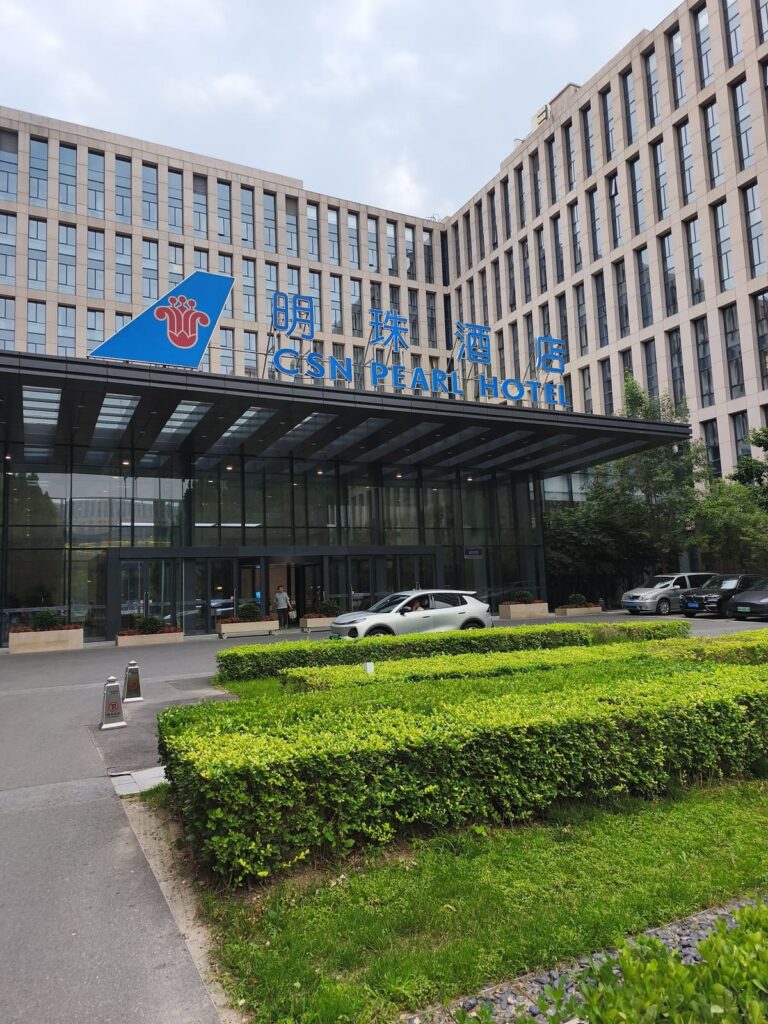
Prior to my trip I was a bit unsure what Chinese hotels would be like. However, at least as far as the hotels in Beijing are concerned, they were fairly similar to what you would find in the US or Europe (further down I will mention some smaller differences I noticed).
The beds were pretty standard (and mattresses overall not as hard as in some places in Asia). While some older/more authentic hotels may have “wet” bathrooms (i.e. when you take a shower you flood the entire room) most were quite Westernized (even at the lower price range).
Obviously, specific amenities vary from property to property but overall they were surprisingly similar to what I am used to: small fridges, Wifi, airconditioning, shower gel etc. Of course you will have to check the hotel description for the specific amenities you need, but at least in Beijing (and presumably other bigger cities) you will have no problem finding the usual comforts.
Read my where to stay post for my recommendations on best areas and hotels for your trip to Beijing!
What to expect pricewise
As everywhere there is a strong correlation between price and comfort. While overall hotel prices in Beijing were quite reasonable (or even cheap compared to the US) you still won’t find true luxury for USD 30!
Based on my experiences, I would estimate hotel prices for Beijing to be:
- Budget chains: USD 35-50
- Mid-tier/tourist category: USD 60-80
- Fancier chains: USD 75-100
- Luxury: USD 150 and up
So what can you expect for that price?
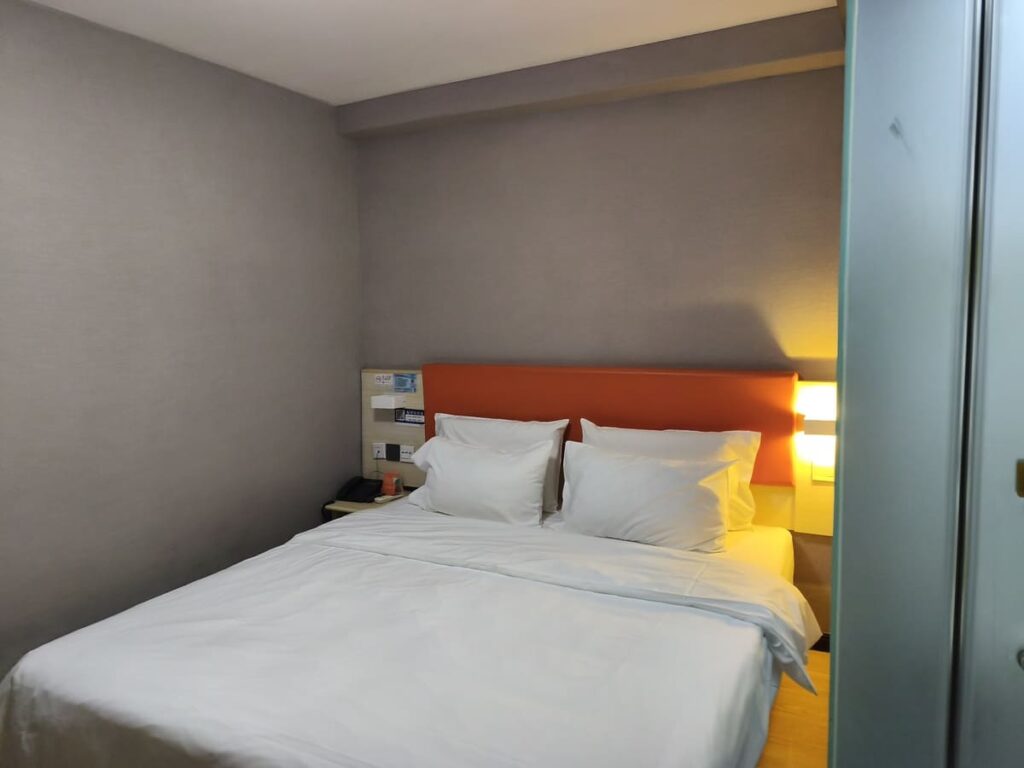
If you are okay staying at an Ibis in Europe or a Motel 6 in the US, a well-rated budget property (like the 7 Day Premium I stayed at in Haidian) will be just fine. Perfectly adequate if not exciting.
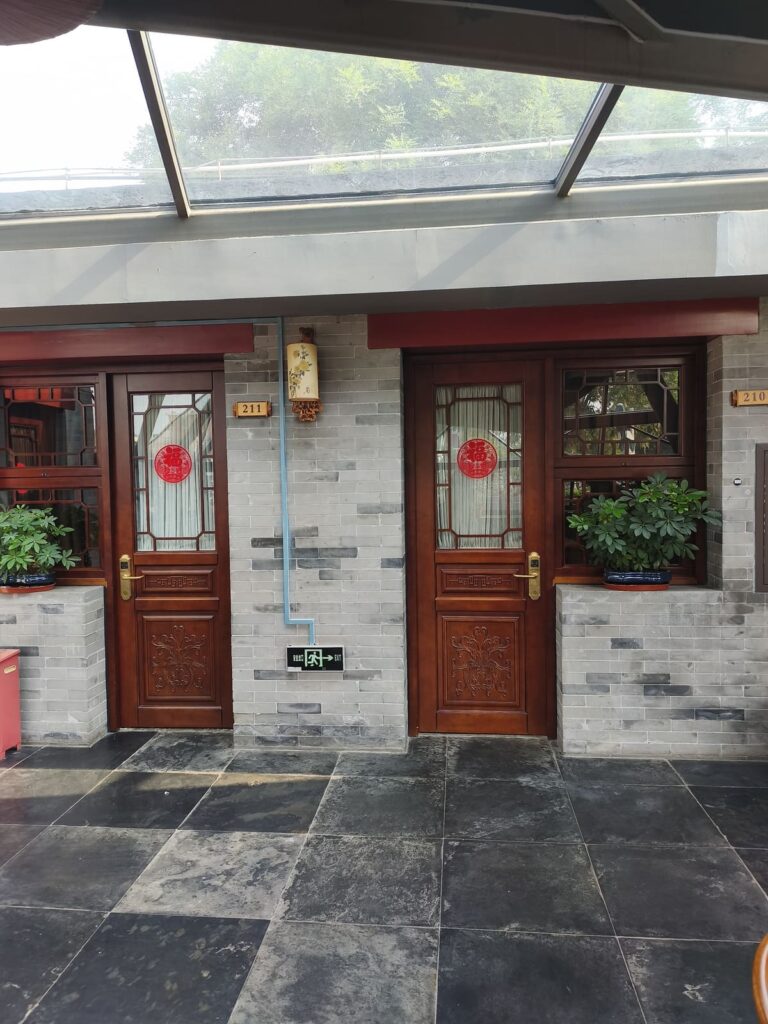
I stayed at several properties that I would rate as mid-tier. They were either in a great location but the rooms a bit dated (like Youfang Hotel right near the Palace Museum) or a bit nicer but further from the nearest subway station (like AC Art Museum Hotel).
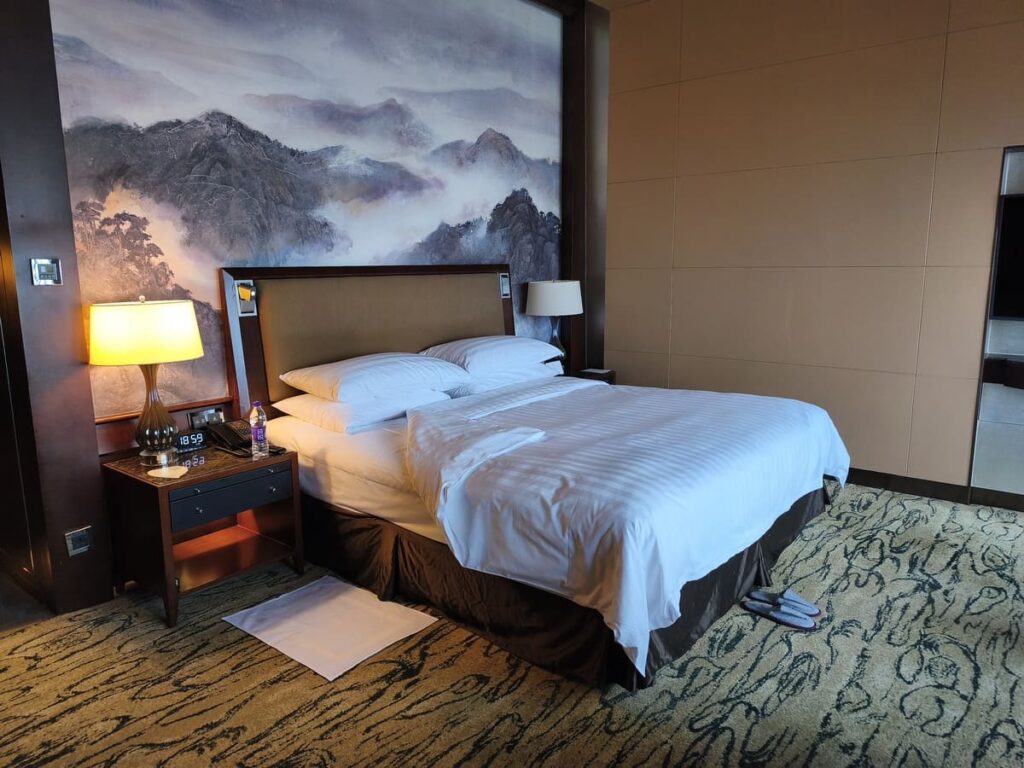
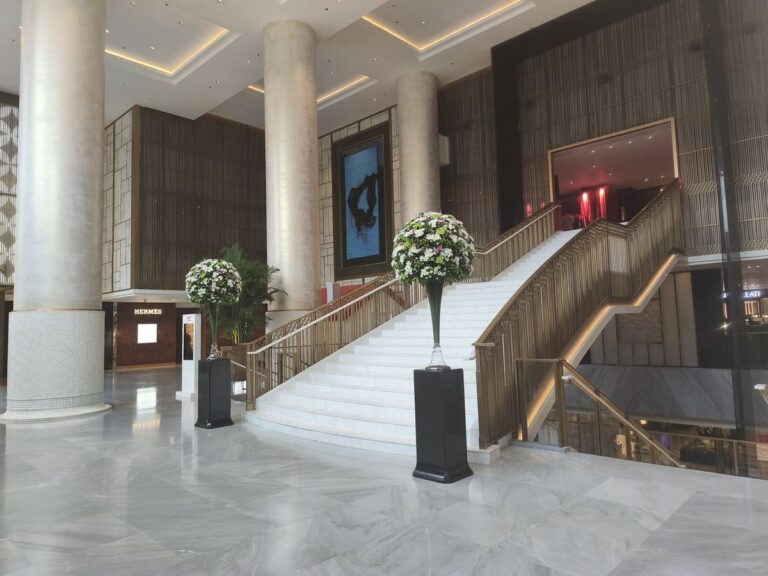
And if your budget is generous you can stay at very nice hotels indeed. My stay at the China World Summit Wing was quite expensive but cost no more than a fairly generic 4-star in many other locations. But here I got amazing views, a stunning room, a huge breakfast, and a free happy hour! (You can read a detailed review of my stay in my Summit Wing post.)
Tips for Booking a Hotel in China as a foreigner
Even though hotels are surprisingly similar to other countries, there are still some aspects that are specific to China. Here are some tips based on my experience:
Things to know before you book a hotel in China
Make sure your hotel has a permit for foreigners
Traditionally, not all hotels in China accepted foreigners as a special permit was needed. Apparently, this regulation has changed but smaller hotels in remote areas may still struggle hosting international visitors.
I had no issue with this at all when booking hotels in Beijing. But just to be on the safe side it is a good idea to double-check on the booking portal to make sure the terms & conditions mention “guests of all nationalities allowed” or something similar. You don’t want to be rejected at check-in!
I recommend booking most of your hotels via Trip.com
I recommend booking most of your hotels via Trip.com. If you see a good hotel or a better price on a different portal (like booking.com) then there is nothing wrong with it. However, Trip.com specializes in China so will generally have the largest selection.
Due to the Trip.com mini-program within Alipay you will be able to reach Trip.com’s customer service even if you lose access to your esim/VPN. I was very happy with my experience – booking and cancelling went very smoothly.
Booking early doesn’t hurt
Booking early is almost always a good idea as you will have the best selection. Now I had no issues getting the hotel I wanted just a couple weeks out, but depending on local holidays etc. this may not be the case.
The good news: Most hotels were fully refundable (more than I generally see in Europe/US). So I recommend you lock in your preferred choice and then adjust as and if needed. I canceled and rebooked several times and had no issues getting a refund.
Prepaying is best
Chinese payment options like Alipay/WeChat have gotten easier for foreigners and more places now accept international credit cards. However, payment can still be a bit finicky so prepaying for the room when booking might be best. My credit cards are iffy at the best of times and I was quite unsure whether I would get Alipay to work (I did!) so I prepaid everything via Paypal. One less thing to worry about!
Choosing the right hotel in China
Up your minimum standard for Trip.com
I usually plan my trips on a budget so I sort the available hotels by price. But first I filter out anything under an 8 (or a 7 if money is tight) on the booking portal. Saving money is great but I do not want to end up in a dump.
However, if you look at the ratings on Trip.com you will see that 9+ (out of a possible 10) abounds. So specifically on that portal for China I would set my lower limit as 9. I am not saying that anything under 9 would be horrible. If you find something that fits all your criteria and it is slightly under 9 it is likely fine. But as a general rule I would assume that Trip.com’s 9 in China is closer to an 8 in other places.
Location, location, location
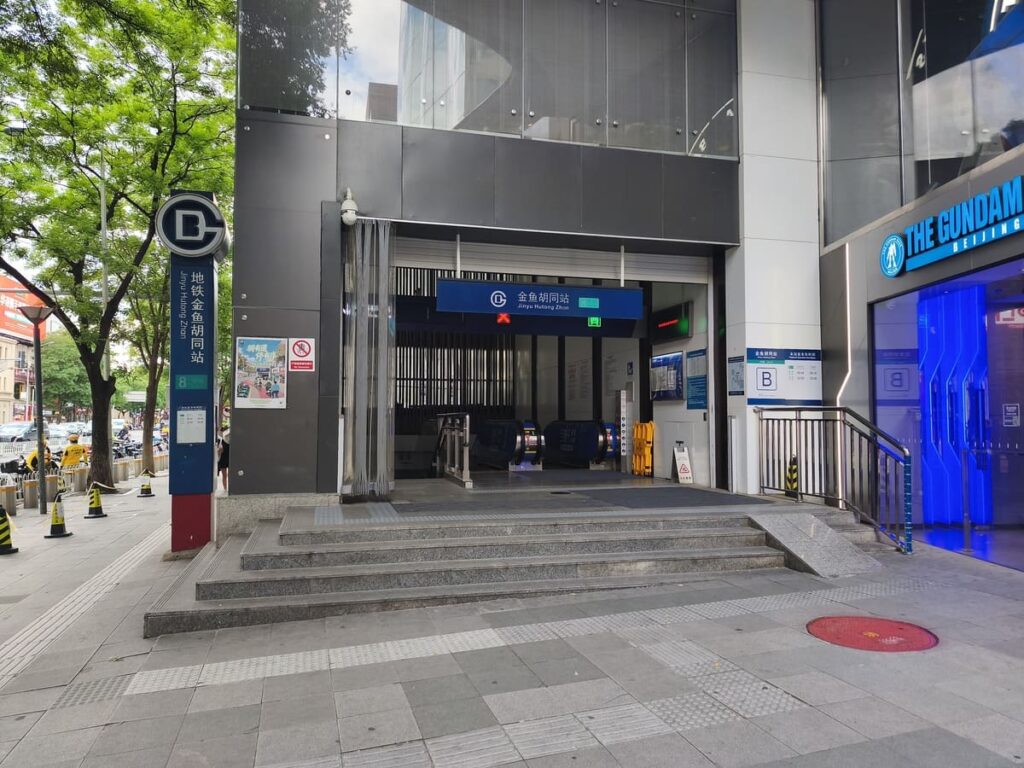
China is a pretty safe country so the chances of ending up in a “bad” neighborhood are pretty small. Still, for more convenience I would try to stay in a more central area near sights you plan to visit. And definitely prioritize easy access to public transit like a metro station, especially if it will be very hot or cold during your stay!
Check for windows before booking
I don’t remember ever having a hotel room in Europe or the US without a window. However, in China rooms without a window are quite common, especially in cheaper hotels or in the lowest room category.
Personally, I don’t much mind that – I always book interior cabins on a cruise to save money and like it just fine. However, I know many people would hate a windowless room. If you are one of them (or are not sure) double-check prior to booking to make sure your room has a window.

What to expect when you get to your hotel
Print your hotel confirmation in Mandarin
It can be helpful to have a confirmation of your booking in Mandarin either as a print-out (my recommendation just to be safe) or on your phone. That way you can show it to a Didi/taxi driver or a passer-by on the street if you get confused. Not all hotels have the English name prominently displayed so it can be difficult to know if you are at the right place. Trip.com offers an option to print out the hotel confirmation in Chinese characters.
Don’t worry about the language barrier
Prior to my trip I was a bit worried about the language barrier. And it is true: Not all hotel employees speak English, not even at reception. However, this was not a problem at all!
First, not much conversation is necessary for checking in (it is similar to everywhere else). Secondly, hotel employees are used to translation apps for communicating with guests. While at many hotels the reception had translation apps ready, it is still a good idea to download the Mandarin pack for Google Translate on your phone prior to your trip so you can access it no matter what.
The apps worked remarkably well. I had no issues at all communicating even if I had more complicated issues. For example I changed my booking to add an additional 6 nights to the 3 nights I had originally booked. It was no problem to ask whether I could stay in the same room using Google Translate and everyone was very accommodating.
A passport is essential
You may have heard that the registration process for international guests is more complicated in China than in most countries. While this is true you likely won’t even notice it as it is all handled by the hotel!
All travellers in China have to be registered with the local authorities. If you stay privately, you or your host have to take care of this. But for hotel stays you don’t have to worry about this as they will take care of everything.
You just show your passport during check-in (as in most countries). They scan/photograph the main page as well as the page with your visa/entry stamp. The process for you is no more cumbersome than check-ins anywhere. The hotel will then take care of the bureaucracy.
Room deposit
Some hotels may require you to pay a deposit when checking in. Only one of my hotels, China World Summit Wing, required a deposit and luckily my Visa worked just fine. In general, international hotels in larger cities will likely accept Western credit cards. Still it is best to have Alipay or WeChat set up just in case your card gets declined.
Early Check-in
Not sure if I was just lucky so do not rely on this. But every hotel I stayed at let me check in early. So very appreciated especially after a long flight!
Hotel amenities
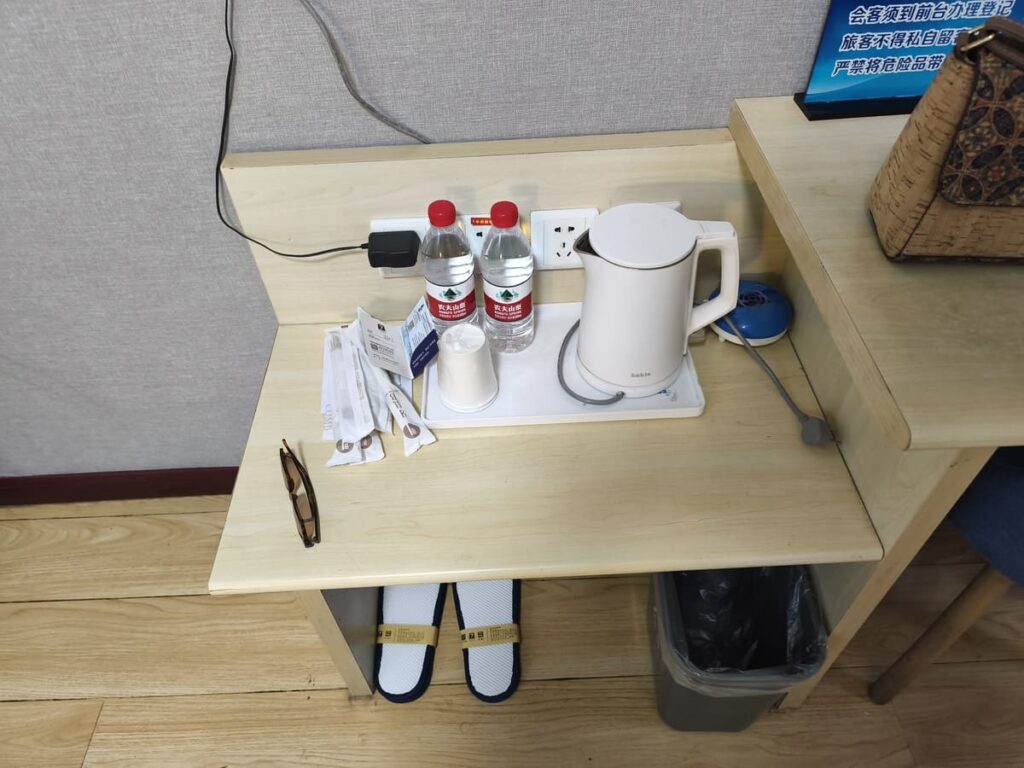
While the hotel descriptions at least in Beijing say that hotels no longer provide free toiletries this isn’t necessarily true. I think I was handed toothbrushes etc. everywhere. If you don’t want/need them be prepared to decline.
Most hotels I stayed at provided two amenities that I have rarely seen outside of Asia: slippers and bathroom scales!
Beware the smoke
Smoking is still a lot more common and accepted in China than in many other countries. Often you can specifically note that you want a non-smoking room when booking but realistically speaking you may be able to smell it a bit.
I didn’t really have any big issues with this but think I caught a whiff here and there – and I am not especially sensitive.
Wifi – yes, but…
All my hotels did offer free wifi. However, hotel internet is restricted by the Great Firewall, China’s restrictions which limit many Western websites, like Google. You will likely need an international esim and/or a VPN (not as helpful in China as it used to be but good as a back-up) if you want to access the internet like you normally do.
I only used the hotel internet a couple of times when there were issues with my esim (it worked perfectly 95% of the time). For non-limited webpages it worked great!
Power outlets are surprisingly easy
Most hotels I stayed at had both US and EU plug-ins. Actually, I had dragged along several adapters as I always need them when traveling to the UK or the US but didn’t even take them out of my suitcase. My EU plugs were fine everywhere (I saw US ones but didn’t actually pay attention to them so not sure if they were at every hotel). Still, I do recommend taking a universal adapter along just in case (but no need to take four like me!).
Free water
Every hotel I stayed at provided two free small bottles of water per day. The water from the faucet is not really drinking quality.

Staying at hotels in China is easier than expected
As long as you have realistic expectations and follow some basic tips, booking a hotel in China is easy and seamless. Actually, I was surprised how smoothly it went! The administrative quirks are really barely noticeable and the language barrier was much less of a problem than I had expected.
Hotels and hotel rooms are not drastically different from the ones in Western countries. And prices are much more affordable so you can easily stick to your budget or even splurge with a nicer hotel than you usually book!