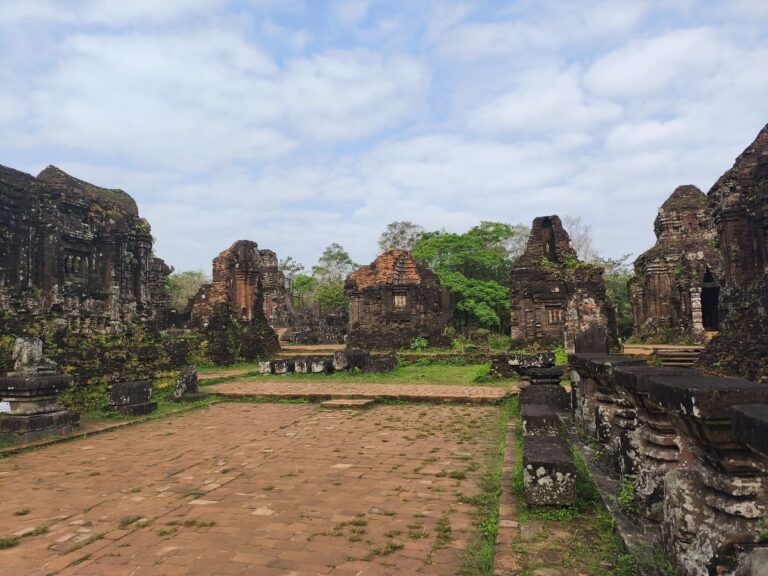
A SHORT VISIT TO LAMA TEMPLE IN BEIJING
This post may contain affiliate links, which means I earn a small commission — at no extra cost to you — if you make a booking or purchase through them. I only recommend services and products that I personally use, trust, or believe will benefit you. Thank you!
Lama Temple is one of Beijing’s most popular sights. Conveniently located not far from the city center, Lama Temple (also called Yonghe Temple) is one of the largest Tibetan Buddhist monasteries in China and indeed quite impressive.
My visit to Lama Temple had a couple of bumps, mostly because I didn’t quite know what to expect. Read on to find out what I learned, what to do, and whether it would make a good addition to your Beijing itinerary. And at the end I will tell you how you can turn a short temple visit into a great half-day activity exploring Beijing’s hutongs and enjoying the vibrant atmosphere of Shichahai Lake.
My Visit to Lama Temple – Learn from my Mistakes so you don’t make a fool of yourself
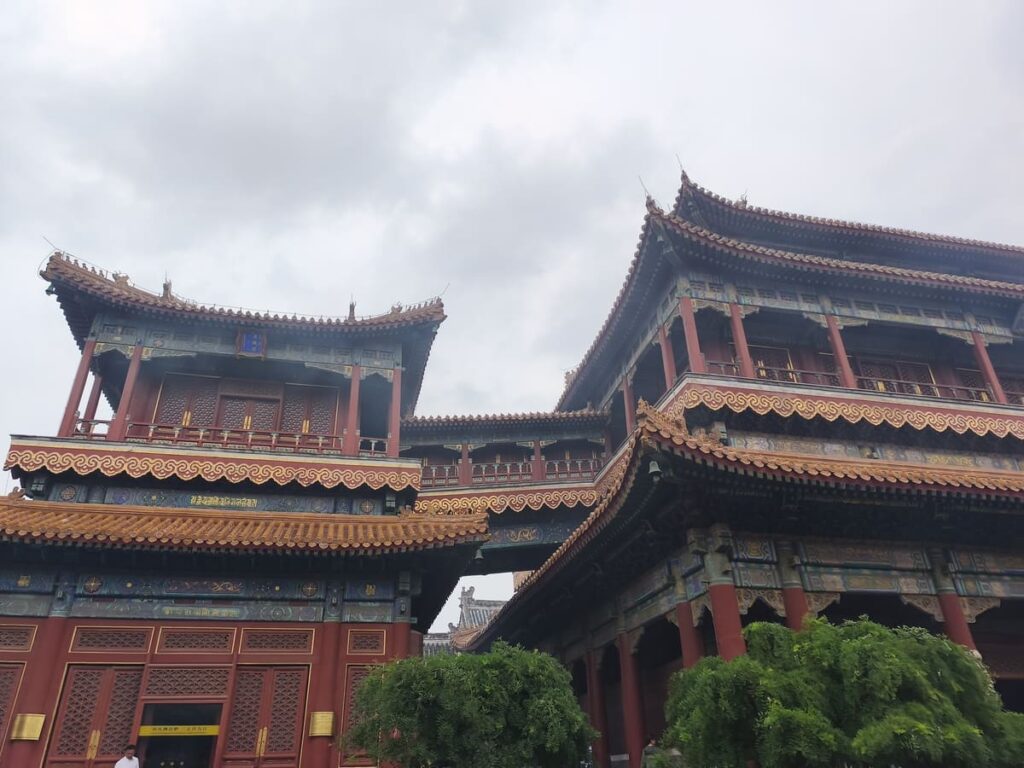
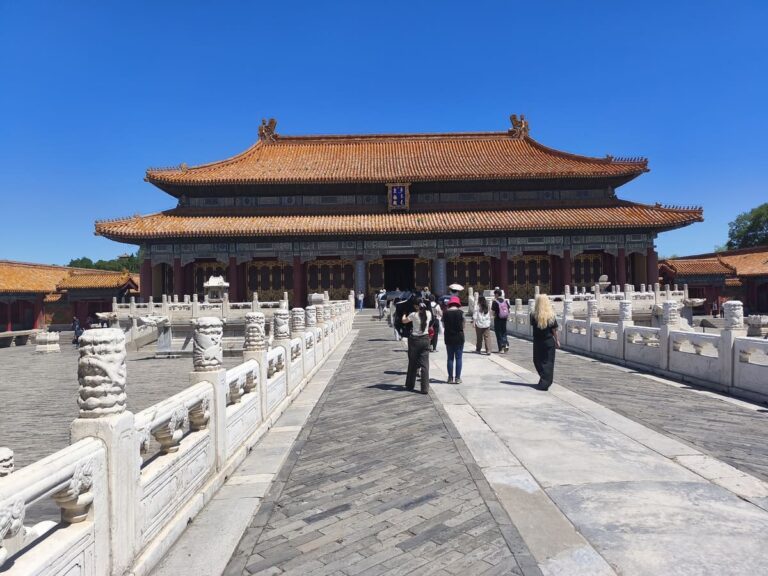
Yonghe’s temple architecture and design are quite unique
Planning and Ticket
Just as with most of the attractions in Beijing, I prebought my tickets via Trip.com a week or so before I got there. The tickets for Lama Temple are probably available on the day and I don’t love being locked into an itinerary. But I would rather pay a small surcharge and be sure I can get in so I prebooked everything I could. At USD 8.57 it was a minor expense and easily fit into my budget.
As is best practice in China, I did take my passport along but unlike at the Forbidden City here it was not needed. All you scan is the QR code you get in an email (or in the app). Still, this could change so do take your passport!
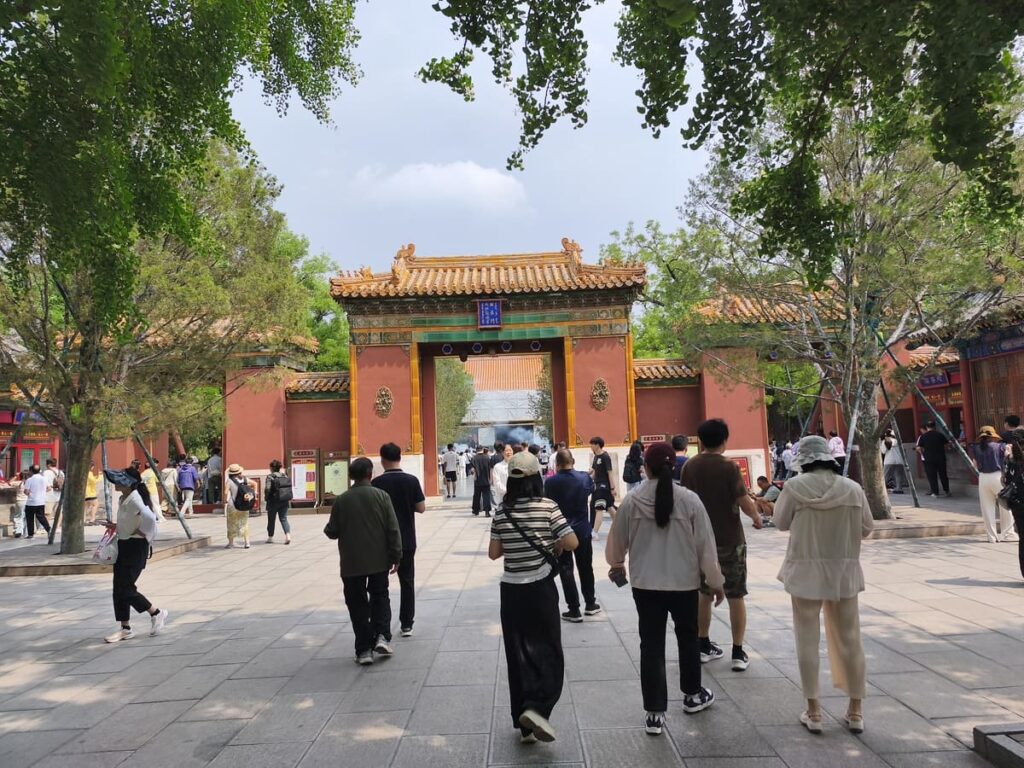
Getting to Yonghe Temple
After checking into my hotel, Junhefu Courtyard Hotel, I just walked to Lama Temple – it is a straight shot and took a good 20 minutes. If you are coming from a different part of town the closest metro station is Yonghegong Lama Temple. You can read more info about how to get around Beijing in my post about the city’s public transit.
When I bought my ticket I had to choose between morning and afternoon – I opted for morning and even though I had to change hotels on that day I got there by around 10 am. I noticed right away that this was the first Bejing attraction I visited with hardly any English signage. I wasn’t even sure if I was at the temple entrance!
However, according to Google Maps I was at the right place so I just followed the line of people going through the obligatory security. I did hold my breath when they scanned my ticket for admittance – it would have been rather embarassing if it was the wrong attraction – but all good!
Mistakes to Avoid on your Visit to the temple
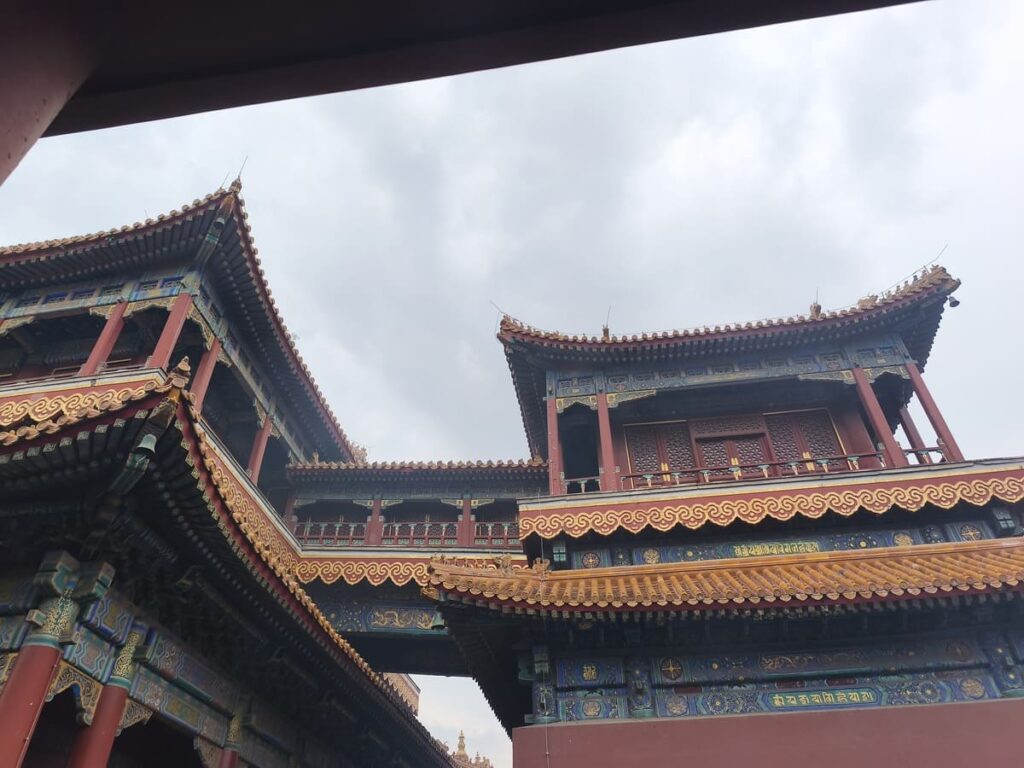
I tried hard to get some photos without including people
Photography
You may have noticed that this post has less (and even worse) photos than usual. The reason is that I felt quite uncomfortable taking pictures.
I am not sure if taking pictures is actively prohibited (like I said there was little English signage). But I saw very few people doing so and due to the crowd of worshippers it felt rather inappropriate. It is probably best to be quite conservative in that respect.
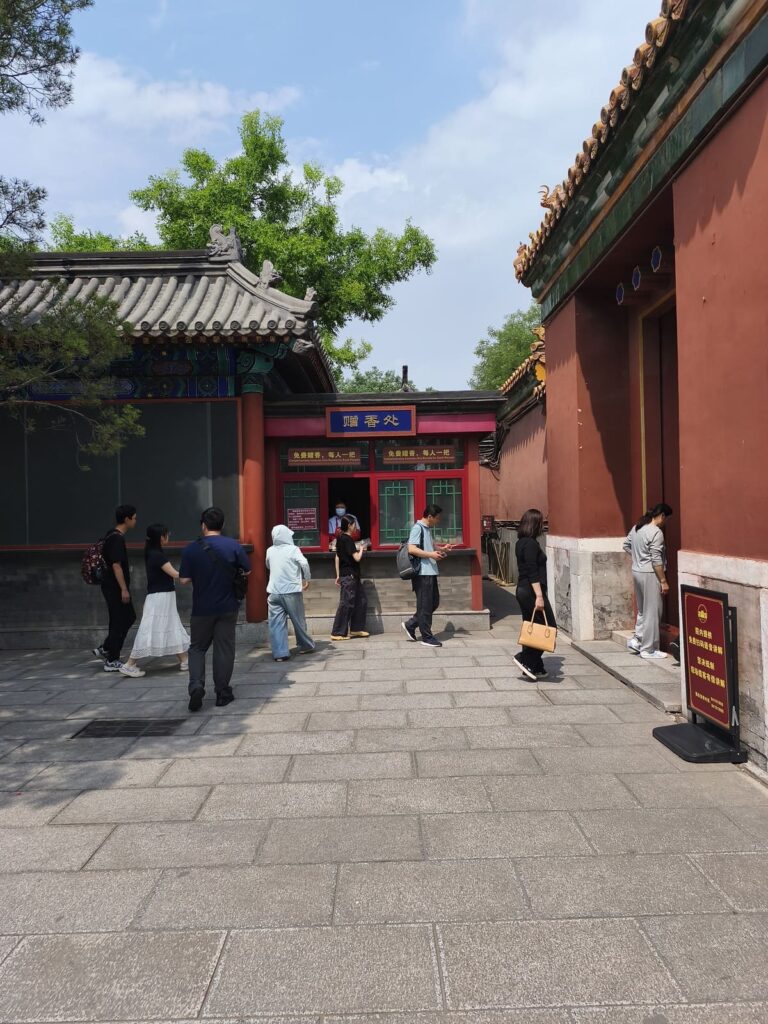
Incense
At the end of the tree-lined path after the entrance you will see a small kiosk on the left hand side. Here you can pick up a bundle of free incense sticks.
Do NOT light four sticks at a time, but always three. I did know that 4 is an unlucky number in China as it is a homonym for death (not what you want when lighting incense). But I just didn’t think about it and happened to take four (it seemed a nice amount). Luckily, someone stepped in and told me (a bit embarassing though)!
You light the sticks at one of the flames and when you are done throw them in a furnace. (This is easy enough and didn’t seem to pose any difficulties. I think.)
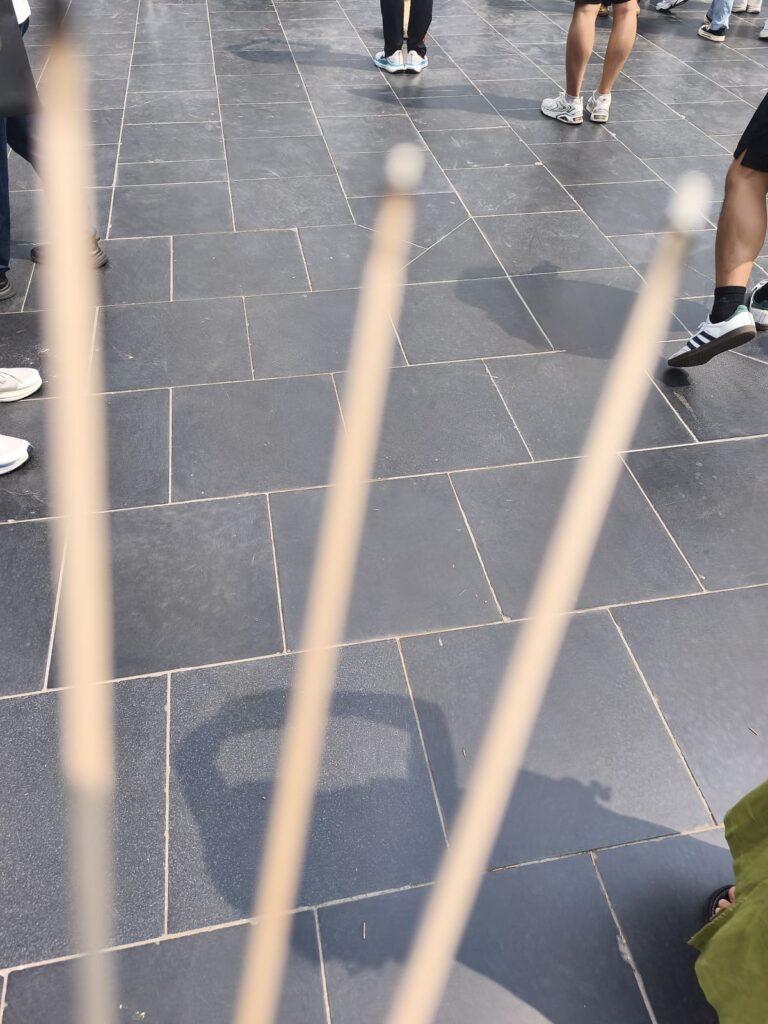
Three is the right number of incense sticks to light
Audio Guide
If you buy your ticket via Trip.com it will come with a short audio guide on your phone. So make sure you have your headphones/earbuds along.
If you get your tickets another way, there are also audio guides for rent at the temple. However, I am not sure if they were offered in English. And as I wasn’t too impressed with the audio guides at the Forbidden City, I likely would not have rented one.
It may be best either to bring an external audio guide or to read up about the history of the temple prior to your visit.
Traffic Flow
You can not leave the temple where you entered but only at the back (it is basically a one-way-attraction). So don’t retrace your steps thinking you can leave where you came in. (Guess who walked all the way back and forth?)
My thoughts about Lama Temple

I’m going to be honest – Lama Temple was not my favorite attraction in Beijing. Don’t get me wrong, the temple is nice enough. My lack of enthusiasm probably came down to several aspects that were purely subjective: I was just not feeling great that day, the weather was cloudy and humid, and I had seen a lot of temples in the last couple of months.
However, in addition to these personal reasons there are a couple more objective reasons why Lama Temple was not my favorite sight in Beijing:
a) It was very busy and is an active place of worship
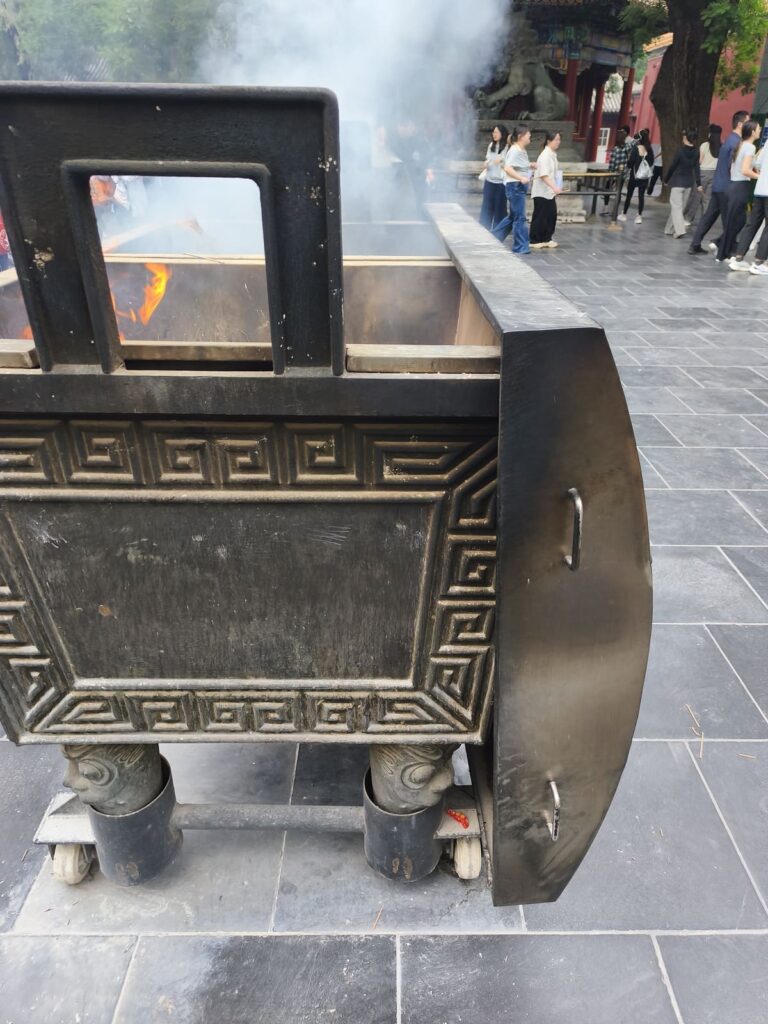
While the temple is big, it isn’t huge, and it was quite crowded. This is not a serene experience! I would recommend to come earlier than I did, right at opening, to see the temple grounds without the masses.
Many temples I have seen in Asia were mostly visited by tourists admiring the architecture, art, and history. While the vast majority of visitors at Yonghe Temple are probably Chinese tourists, most of them were actively praying and worshipping.
This is of course a positive per se – after all that is the purpose of a temple. But it did make me feel a bit conspicous, similar to touring a church during a service. On the other hand, the fact that it is an active temple may be the reason YOU will love it.
b) It didn’t have the same wow factor as some other temples
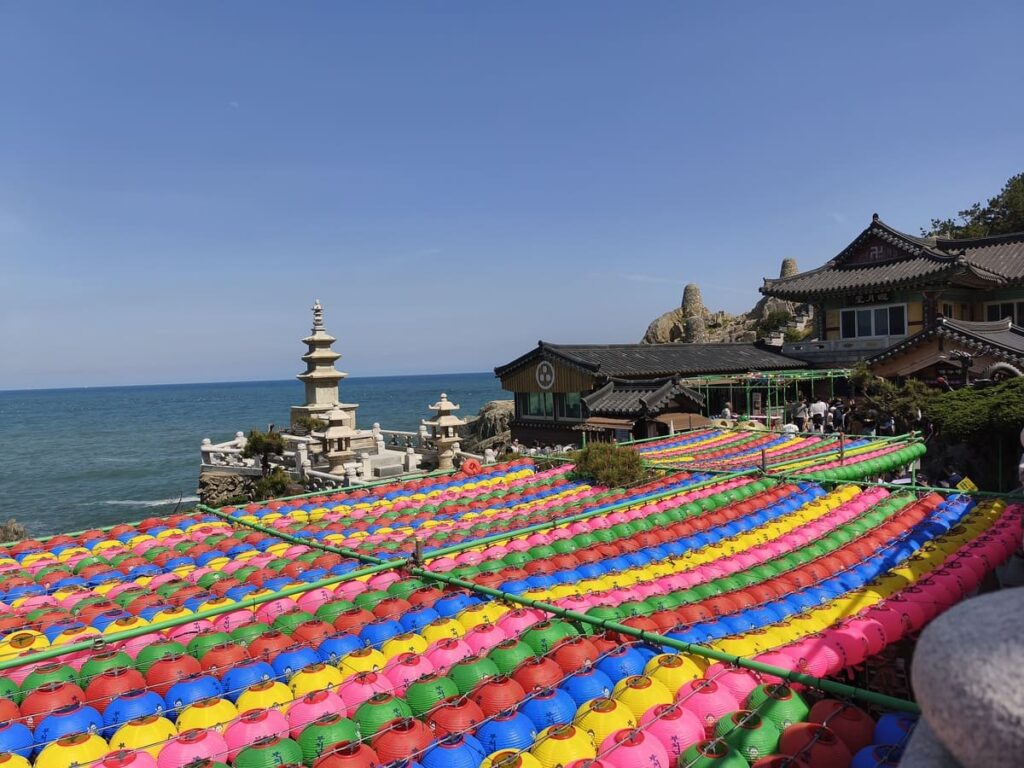
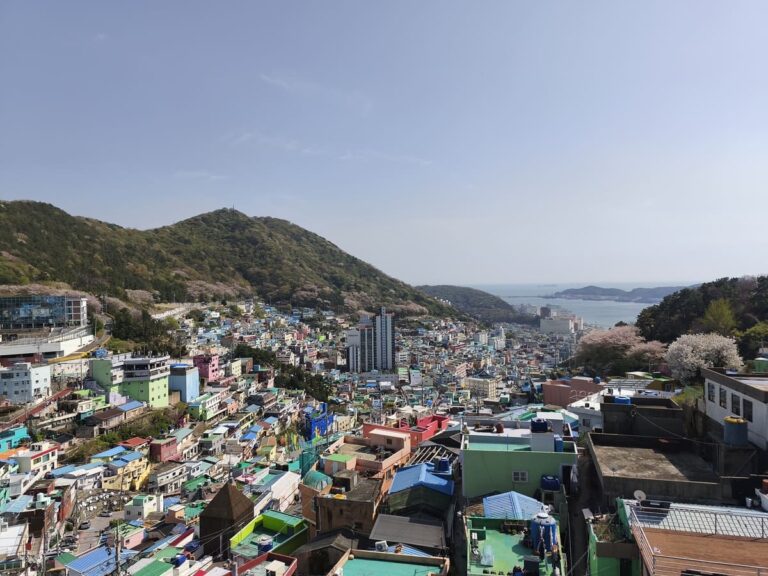
Haedong Yonggungsa Temple in Busan, Korea, has a stunning location
Lama Temple is beautiful and the mix of Chinese and Tibetan style unusual. But many temples I have seen during my six months in Asia had something special that really takes your breath away, like the incredible sea views at Korea’s Haedong Yonggungsa Temple.
Lama Temple is a city temple so there is far less impressive landscaping, it is not as vast as some temples I have seen, and there are no special views.
Is Lama Temple worth a visit?
Yes, Lama Temple is worth a visit but I would not prioritize it over other attractions, like the Forbidden City/Palace Museum, the Summer Palace, and Temple of Heaven.
Yonghe Temple is an impressive Buddhist Temple and the Tibetan style is unusual and beautiful. I would recommend visiting Lama Temple especially if you have a deeper interest in Buddhism or if this is the only (or one of few) temples you will see on your trip.
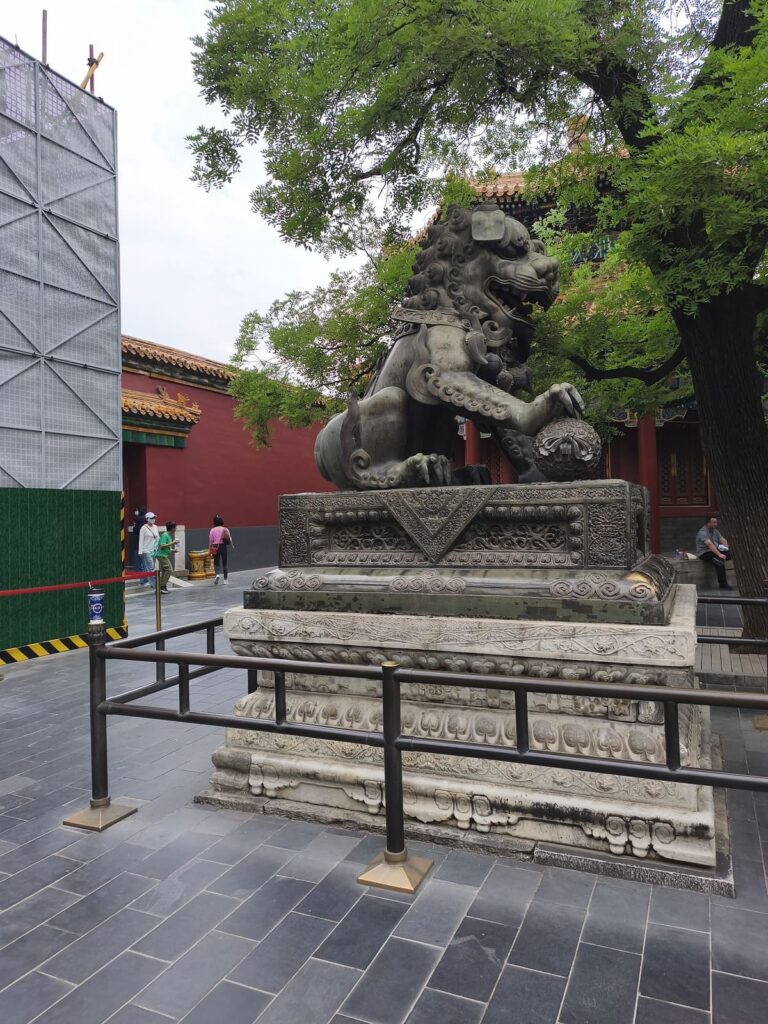
How much time to visit Lama temple?
Unless you have a deeper interest in Buddhism or history/art, visiting Lama Temple won’t take much time. I would say a good hour is enough to walk through, light all your incense sticks, and take a look at the art and architecture.
I was in and out in just over an hour (and that included some time sheltering from the rain). If you know me (or my blog) that will come as a surprise as I am usually a very slow tourer. This may have been partly because I felt a bit off but in general I think Lama Temple will take a lot less time than for example Shougang Park.
Nearby Attractions
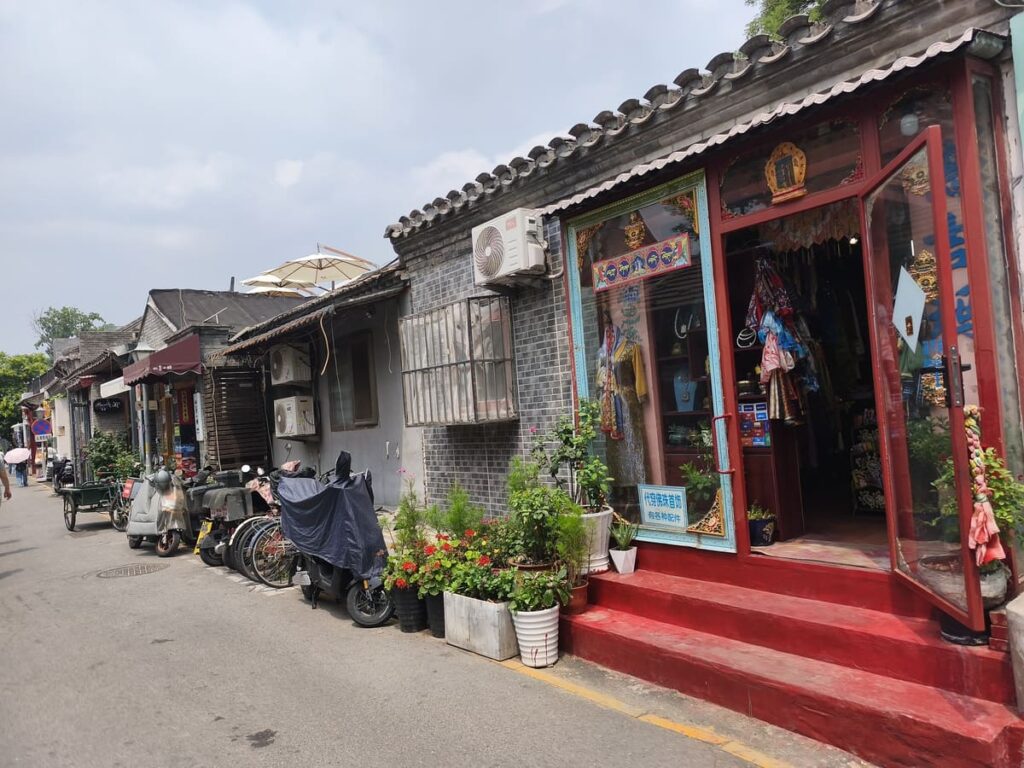
While I am a bit ambivalent about Lama Temple, I strongly recommend a walk through the surrounding hutong area. Depending on how much time you have and how far you want to walk, there are several attractions that are worth a visit.
If you use the following rough itinerary you can easily turn a visit at Lama Temple into a nice half-day plan for Beijing. Actually, this is part of my suggested itinerary if you have three days to spend in the city!
1. Confucius Temple and Imperial College Museum
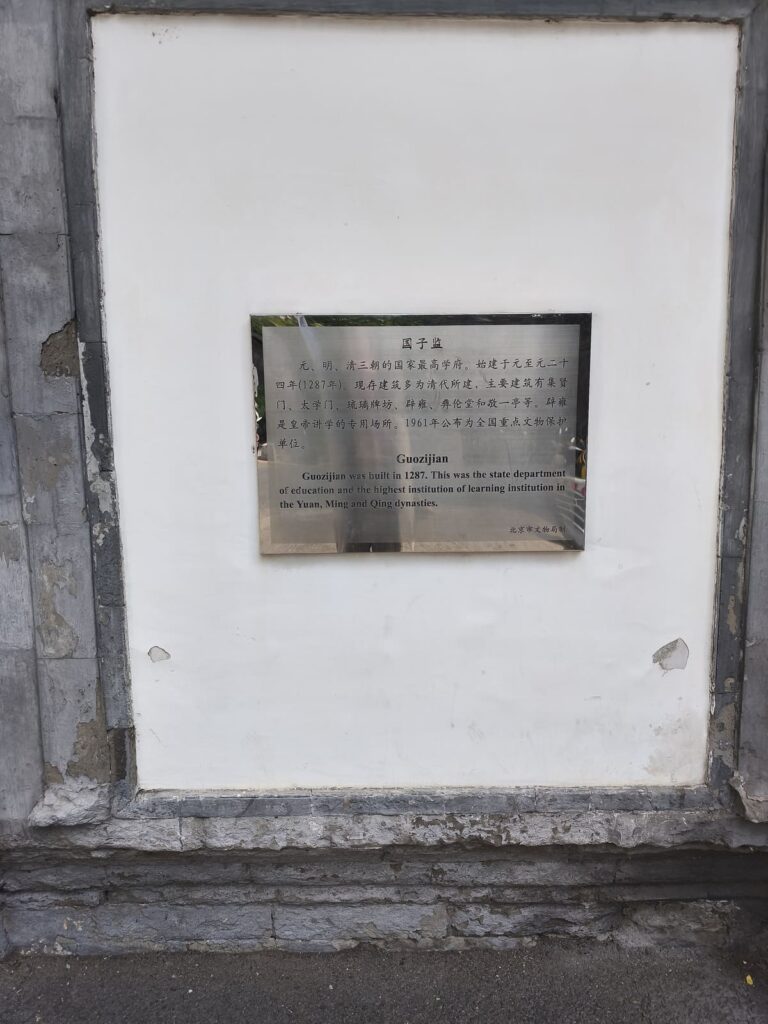
Pretty much right across the street from Lama Temple is the Confucius Temple and Imperial College. I did not learn about this before my trip and just happened to see it when visiting Lama Temple.
I didn’t go in right away (too hot and exhausted) but did put it on my list of things to see. It looked very interesting, especially if you are a C-Drama fan like me. Unfortunately, I never managed to get back to tour it. But it is definitely on my list of must-dos for my next trip to Beijing.
After touring the Imperial College (or just peeking through the door like me) it is a bit of a walk to the next stop. It is a pleasant and interesting walk through different hutong streets. Some are quite touristy with manicured shops while others are more authentic with parked cars and trash cans. Just watch the traffic as there isn’t really a sidewalk and many vehicles are electric and therefore quiet.
If it is too hot or if you want to save your energy you could use the subway or a bus to get to the Bell and Drum Towers.
Bell and Drum Towers
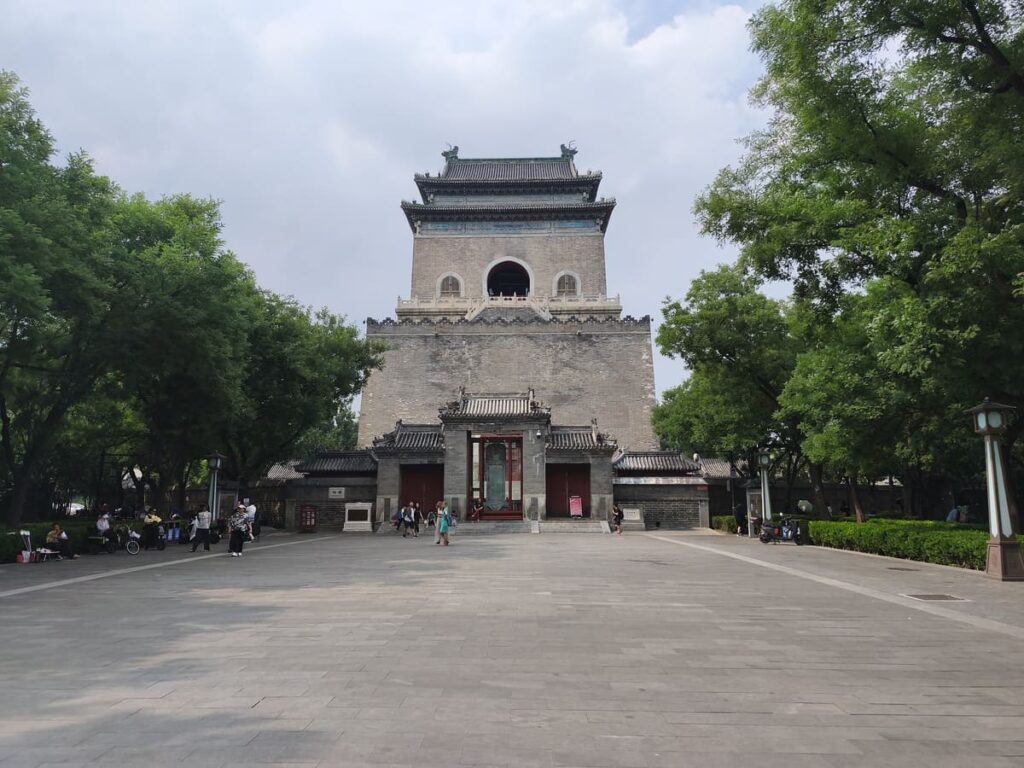
The Bell and Drum Towers are two quite different towers (one in grey stone, one in the familiar terracotta pink/red) separated by a small park. Both are impressive and well worth a look.
The square separating the towers is one of many places in Beijing where you can see locals enjoying various games and outdoor activities: playing ball, dancing, Tai Chi, and much more. Watching people of all ages having fun was one of my favorite things about Beijing.
You can buy a ticket to go inside/upstairs at the Drum Tower – yet another thing I have on my list for a future visit.
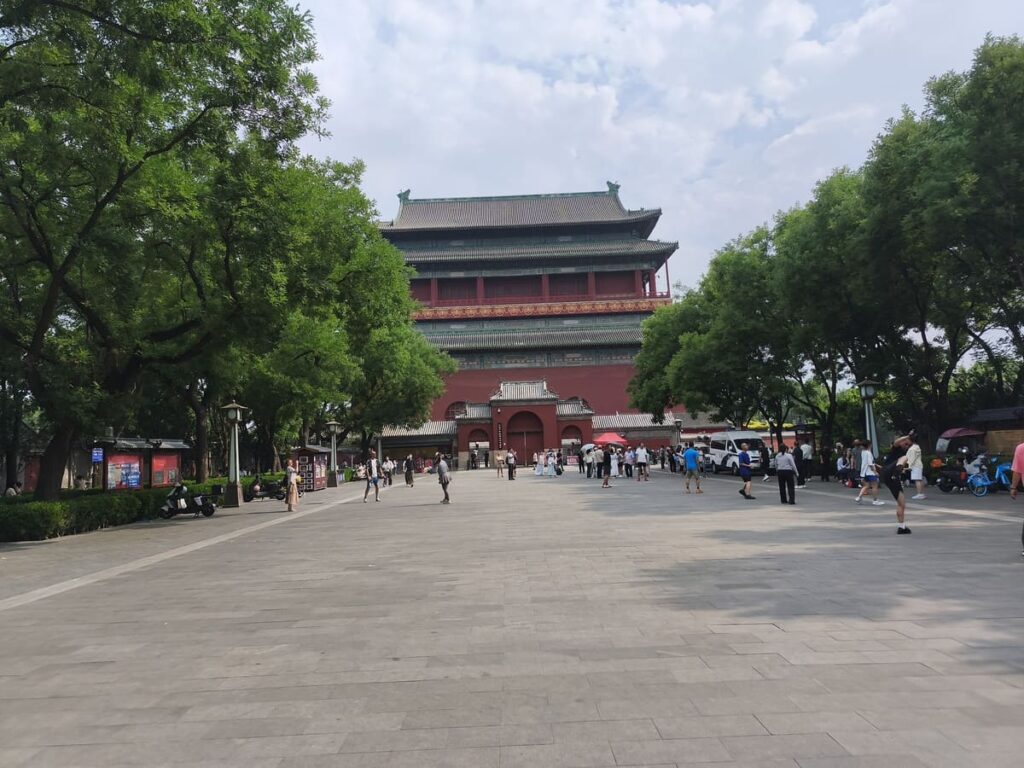
Stroll through the Streets and Hutongs
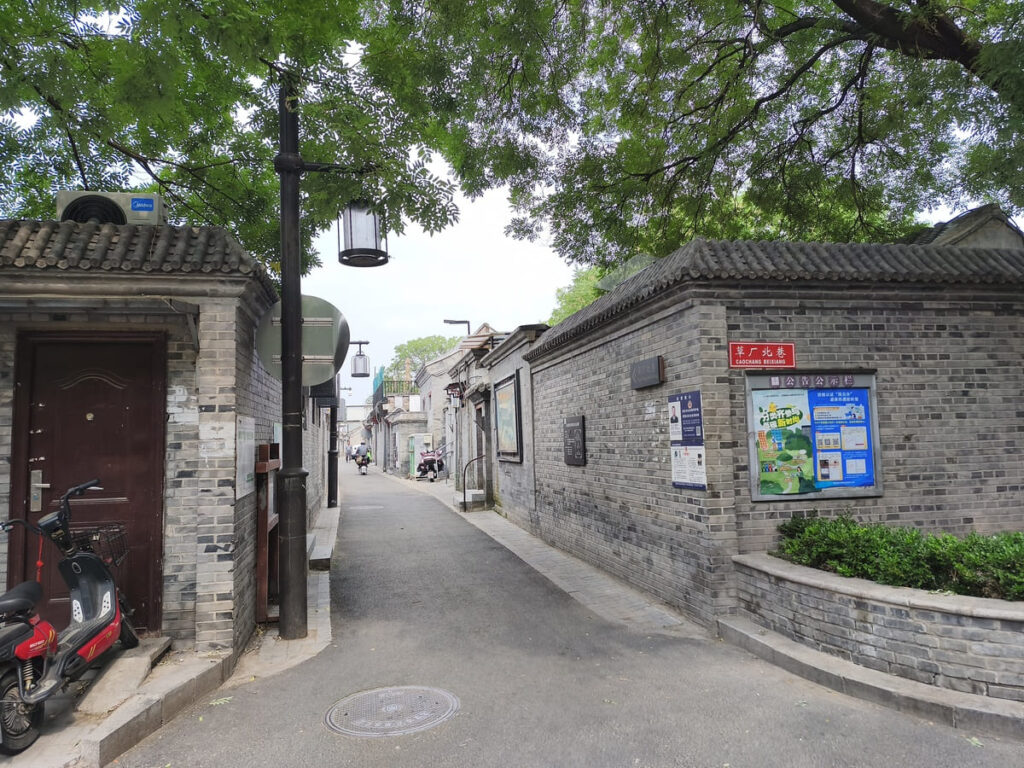
From the Bell and Drum Tower I strolled through the alleys and streets, heading in the general direction of Shichahai Scenic Area (either AMap or Google Maps should work for this).
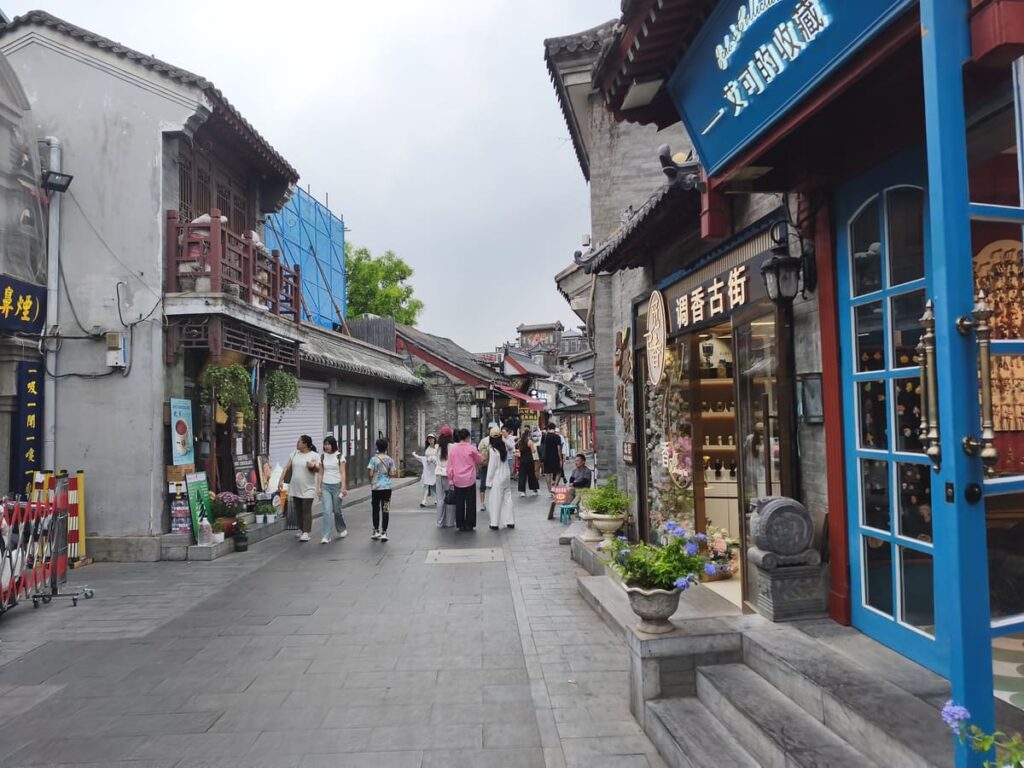
Basically, I just wandered along and followed interesting looking streets. They are lined with restaurants, food stalls, shops, cafes, boutiques, bars etc. There were plenty of tourists as well so it was easy to follow the crowds. After a while you will get to the lake shore of Shichahai (if not take a peek at your map app).
Shichahai Scenic Area
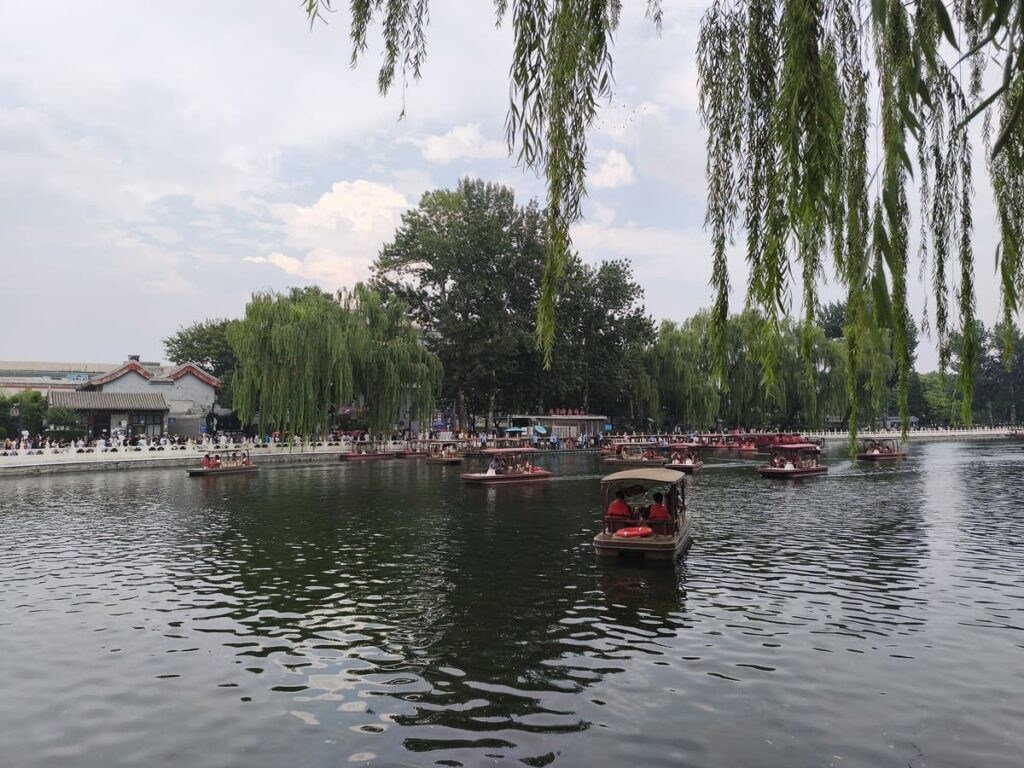
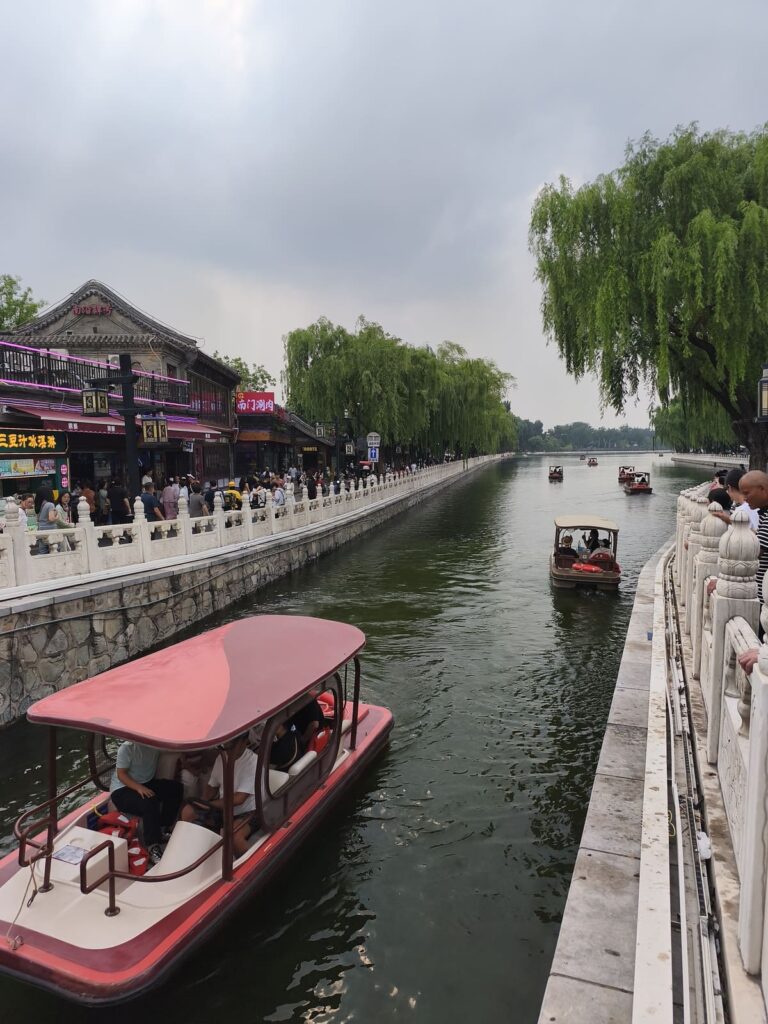
Shichahai is basically a large lake with boats and bridges, surrounded by a lake walk/street lined with shops, bars, restaurants, and entertainment. You can find pretty much any food you want to try!
I was there on a Saturday afternoon and it was very busy. At least on the weekends this is not the place to ponder in serenity. It is vibrant, busy, and alive (or you could say a bit of a madhouse). There is lots going on with rikshaw drivers, vendors, crowds of tourists, boats etc.
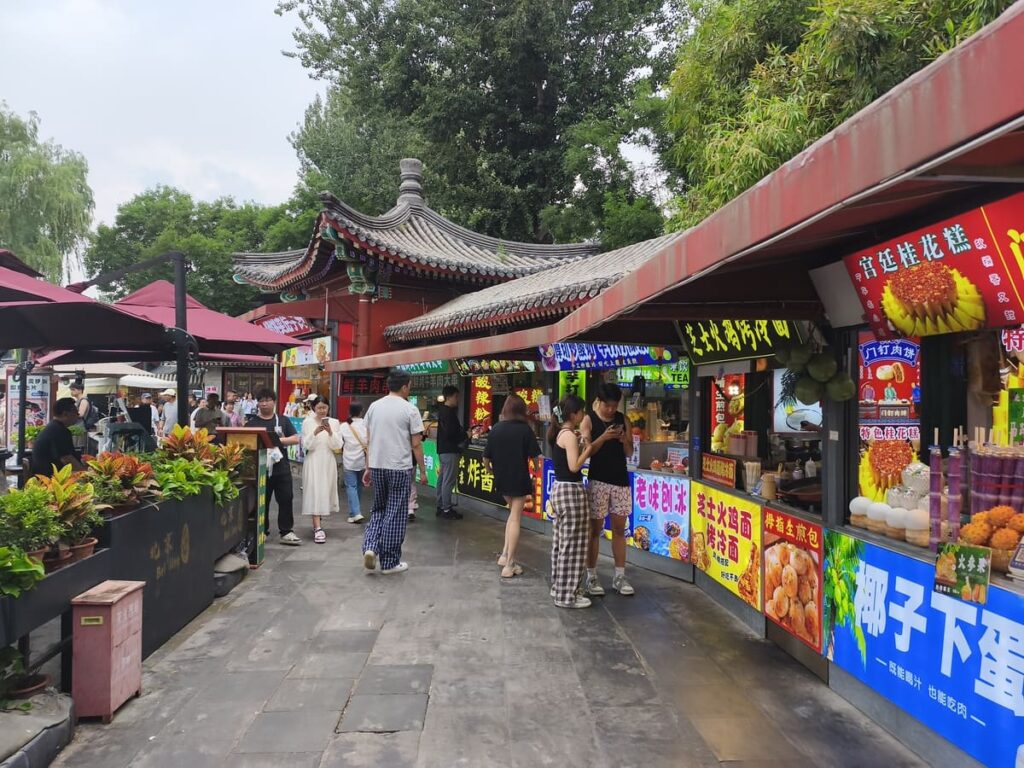
I highly recommend a visit of Shichahai if you want to experience the hustle and bustle of a popular leisure spot in China. Even though I was still not feeling great I enjoyed it. With better weather (and on a different day) I would have absolutely loved it. Shichahai makes an excellent addition to any Beijing itinerary.
Conclusion
Lama Temple is a beautiful and unusual temple that is worth a quick visit, especially if you have an interest in Buddhism or don’t have many other temples on your itinerary. It is an active place of worship which makes it more authentic but also makes touring a bit awkward.
If you have time, definitely combine your temple visit with a stroll through the hutongs. The Imperial War College and the Bell and Drum Towers are some attractions on your way from Lama Temple to Shichahai Lake. The Shichahai Scenic Area is a top spot for spending a sunny afternoon or evening surrounded by locals and Chinese tourists with plenty of shops and restaurants. And if you have even more time (and energy) there are several other parks nearby you could visit.
Don’t leave home without it
I can honestly say that I would never go on a trip without the appropriate insurance. Needs vary and there are many different insurance products. Personally, I think medical insurance at a minimum is essential. It only takes a small injury or a pesky virus to rack up the bills!
World Nomads offers coverage for more than 150 adventure activities as well as emergency medical, lost luggage, trip cancellation and more and is often recommended for international travelers who want comprehensive protection.
SafetyWing is a budget-friendly option offering a subscription model and is especially well-suited to long-term travelers or digital nomads.
As always, read the fine print, check your existing coverage, and make sure it is the right product for you.
I receive a fee when you get a quote from World Nomads using this link. I do not represent World Nomads or SafetyWing. This is not a recommendation to buy travel insurance.