HOW MUCH I SPENT IN 3 WEEKS IN BEIJING, CHINA
Some of the links in this post are affiliate links, which means I earn a small commission — at no extra cost to you — if you make a booking or purchase through them. I only recommend services and products that I personally use, trust, or believe will benefit you. Thank you!
If you are planning a trip to Beijing or China in general you will likely wonder how much money to budget. Correct and current information can be hard to find as there are surprisingly few international visitors to Beijing. But no worries, you have come to the right place!
I just spent three weeks in Beijing in June 2026 and below I will give a complete overview of what I spent. This is part of my 6 month expense summary as a digital nomad (check out how much I spent in Chiang Mai, Bangkok, and Da Nang). I spent my time in Bejing mostly as a regular tourist though so the expenses are a bit different from my other installments.
Some general info
Travel budgets vary widely, not just according to destination but mostly due to personal preferences (and how rich you are!). To help you understand MY costs (and use them to come up with YOUR budget) I give quite a bit of info below about what I spent my money on and why. You may prefer a fancier hotel, do more organized excursions, or (most likely) eat more or better.
However, if you are in a hurry and just want some plain numbers to get an idea how much to plan for a trip to Beijing, you can jump right down to my cost totals and to a list of prices for typical items.
Accomodation in Beijing
During the rest of my six month Asia trip I mostly stayed at AirBnBs but there are no AirBnBs in China. As I had no clue how to get a similar short stay apartment (and was treating my time there as a vacation anyway), I stayed at regular hotels.
All in all, I stayed at 6 different hotels at various price points, ranging from USD 40 per night (Beijing CSN Pearl Hotel at Daxing Airport) to USD 275 per night (China World Summit Wing). My average cost per night for the 20 nights was USD 74.70 and in total I spent USD 1,494 on hotels.
Read on for a short overview of what you can expect at each price point as well as a short summary of each stay.
Youfang Hotel – 4 nights
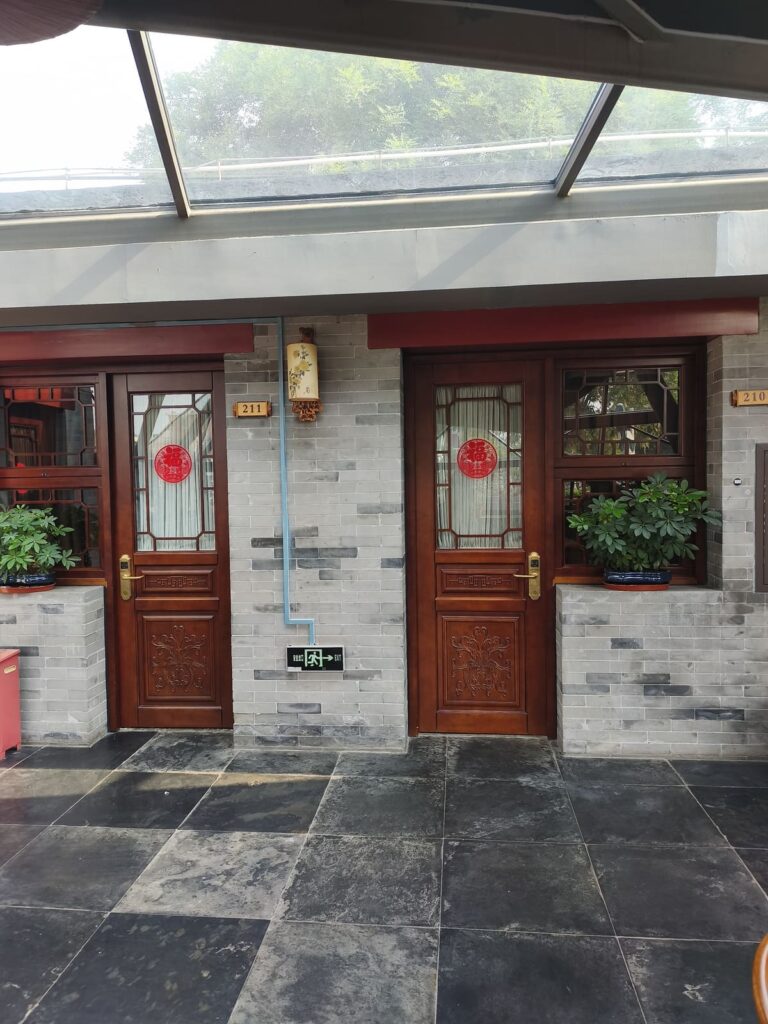
I loved the updated interior hallway at Youfang Hotel
I first spent 4 nights at Youfang Hotel (USD 70.75 per night) very close to the city center and paid a total of USD 283.46. Overall, I would classify Youfang Hotel as tourist class with some nice upgrades. The shared roof garden and glass-roofed lounge are a highlight and service was friendly. English was limited but I had not problems communicating.
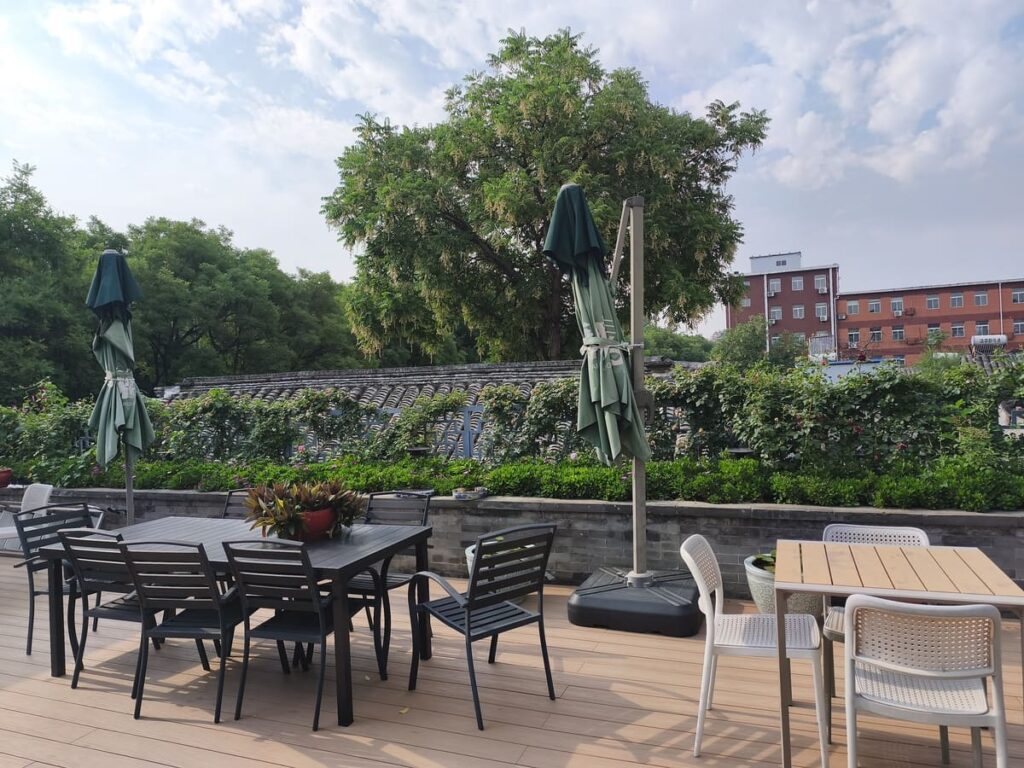
The biggest plus of this property is definitely the location. It is very close to the Forbidden City and in easy walking distance to Wangfujing Street. Metro stations are about a 10 minute walk away. Definitely a top location for a first/sightseeing oriented visit to Bejing!
Junhefu Courtyard Hotel – 2 nights
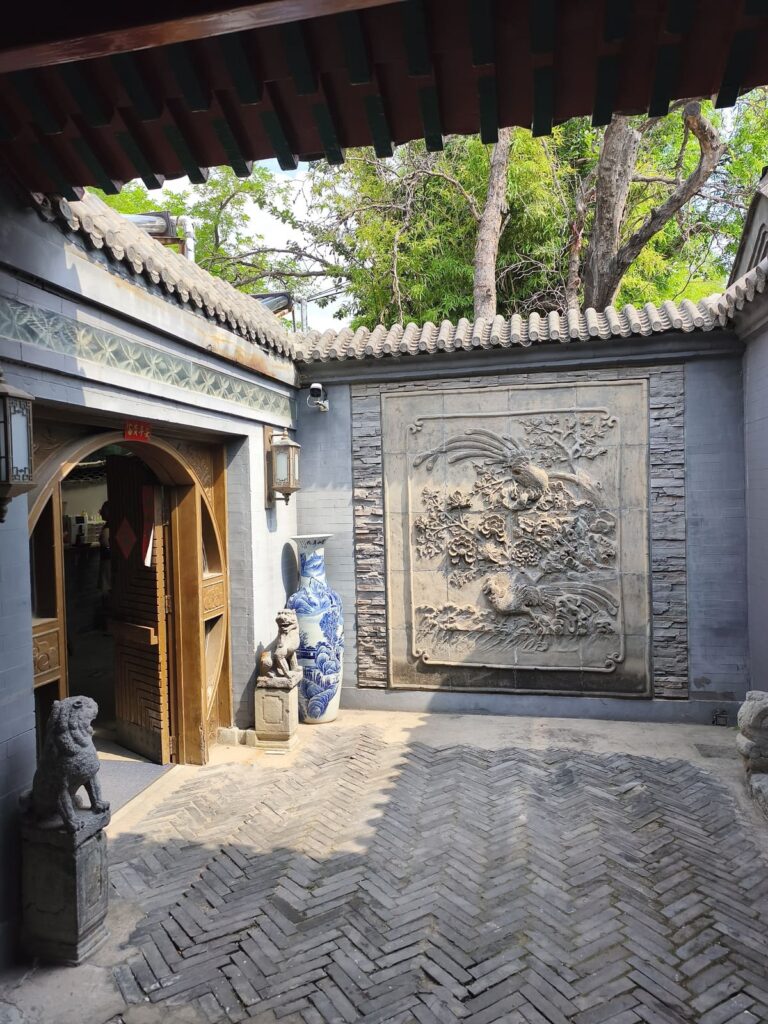
Junhefu Courtyard Hotel provides a real Hutong experience at a reasonable price
Next I stayed for two nights at Junhefu Courtyard Hotel (USD 51 per night) at a total price of USD 102.36. This property is located in a traditional hutong and very atmospheric though slightly rough around the edges (furniture a bit wobbly and the walls could use a new coat of paint). However, the service was very friendly and with breakfast included offered excellent value for money as long as you don’t expect perfection.
The location is excellent to explore the nearby hutongs and you can walk to various nearby sights, like Lama Temple or Shichahai, though it is a bit of a hike. There is a metro station fairly close by (about 10 minutes) but this part of town is not as convenient as the Wangfujing neighborhood for general sightseeing. Ideal if you want to be immersed in a more local area and enjoy walking.
7 Days Premium Hotel (Beijing Zhongguancun Renmin University Suzhoujie Subway Station) – 9 nights
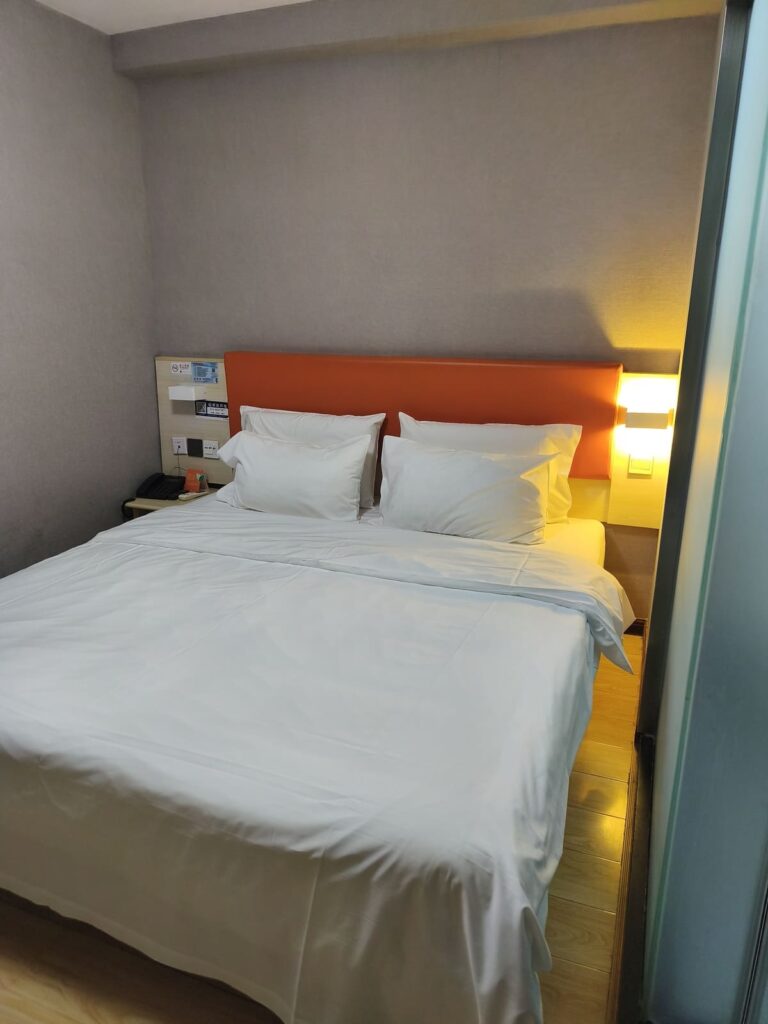
This hotel was not exciting, but clean, affordable, and very close to the subway station
Originally I had only booked 3 nights at this 7 Days Premium Hotel in the Haidian area but when I decided to cancel my side-trip to Chengde I extended for another 6 nights as I liked it so much!
The price per night was USD 41.33 for a total of USD 372. 7 Days Premium is a Chinese budget chain and does exactly what you would expect from a hotel of that kind. If you are fine with staying at an Ibis in Europe or a Motel 6 in the US you will have no issues here. If you think the local Marriott is roughing it, you’d better pass.
I was clearly the only foreigner there and the reception didn’t speak English but that was no issue at all. Using a translation app it was easy to communicate and everyone was friendly and helpful.
Staying in Haidian – the University and Summer Palace area – worked very well for me, but it is quite a distance from the main sights in the city center. If you are only in town for two or three days it may not be the most convenient. However, the metro station was just 2 minutes from the hotel which made daily travel as well as getting there with luggage easy. And of course the Old and New Summer Palaces are quite close.
An excellent place if you want/need to save money, dislike tourist areas, want to really immerse yourself in a local area, and don’t mind some extra travelling time.
A. C. Art Museum Hotel – 2 Nights
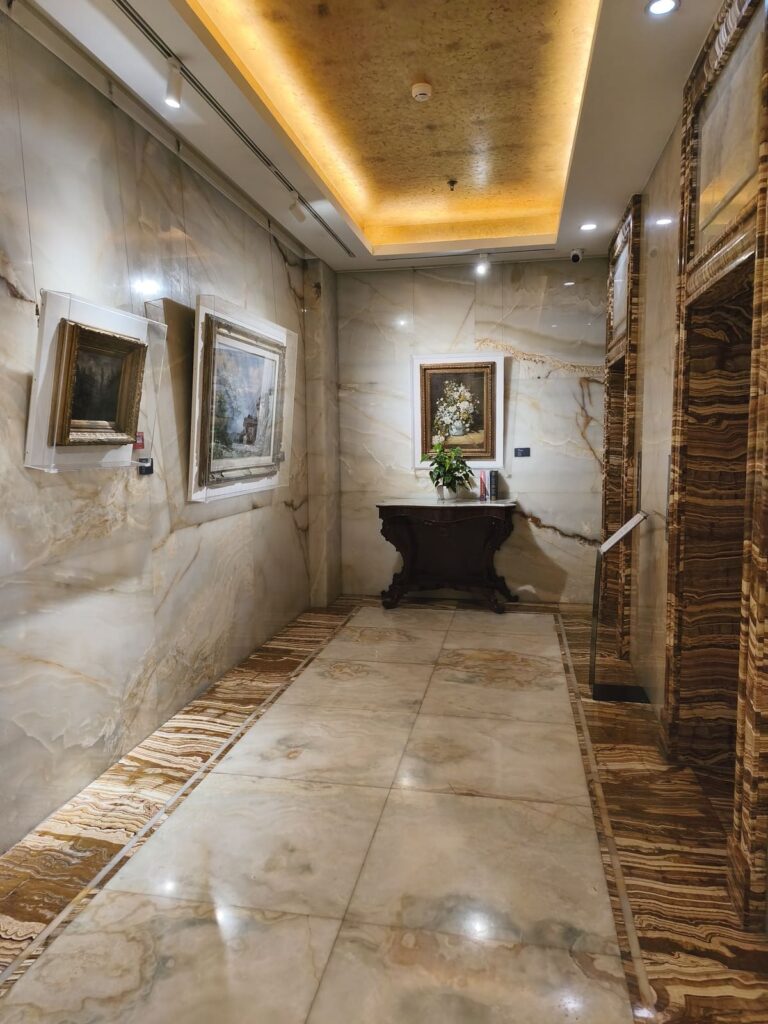
This hotel had a quite unique vibe
Next I stayed 2 nights at A. C. Art Museum Hotel in the Embassy/Sanlitun District. At USD 73.50 (USD 146.90 total) it was in the middle price range for my trip. The hotel is quite interesting as it is a mix of museum and hotel, with art all over the public areas.
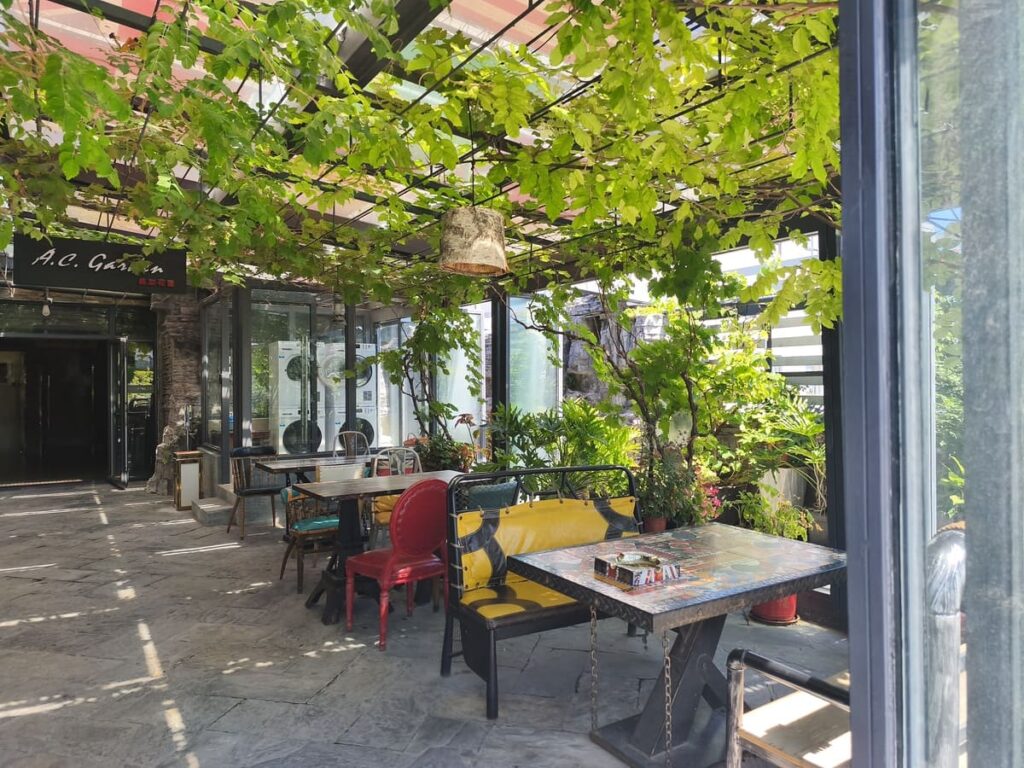
The roof garden and attached laundry were a big plus here
Highlights were the slightly fancier room, the beautiful roof garden, the free laundry facilities (sorely needed), and the easy walking distance to Taikoo Li. On the negative side, the service was rather subpar and while there were several metro stations nearby, they did all require a good 15 minute walk.
Overall, a good choice if you want a nicer room at a good price, enjoy the international and artsy vibe, want to stay in the popular Sanlitun area, and don’t mind the slightly further walk to the nearest metro station.
China World Summit Wing – 2 nights
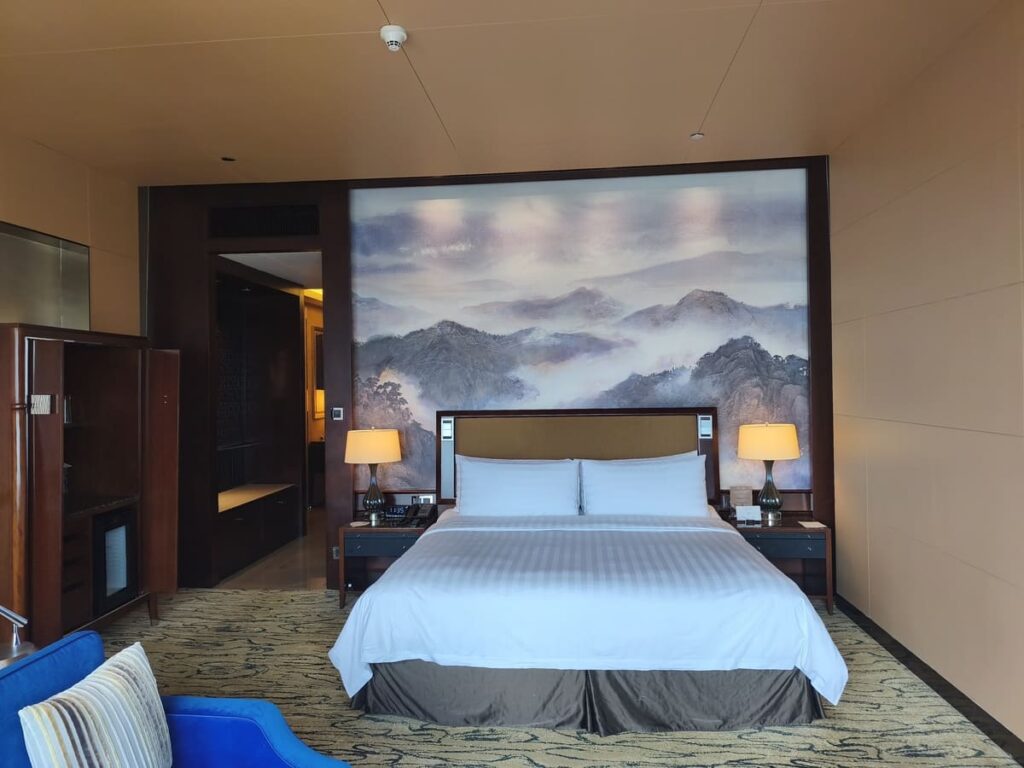
My next hotel was by far my favorite on this trip and one of the best hotels I have ever stayed at! The only real negative at China World Summit Wing was the hefty price tag of USD 275 per night (USD 550 in total). While this was quite a bit over my usual budget, it was a wonderful splurge at the end of my trip and I highly, highly recommend it. (Check out my detailed review for more info.)
As you might expect from a 5 star hotel, service was excellent and both public areas and room felt quite luxurious. If your standards are very high, you might find the rooms slightly dated and a tiny bit worn but for me this was more than made up for by the fact that everything was practical and comfortable. I am NOT a fan of stylish chairs that are uncomfortable or switches so complicated you can’t get them to work. So I very much appreciated the understated luxury and comfort of China World Summit Wing.
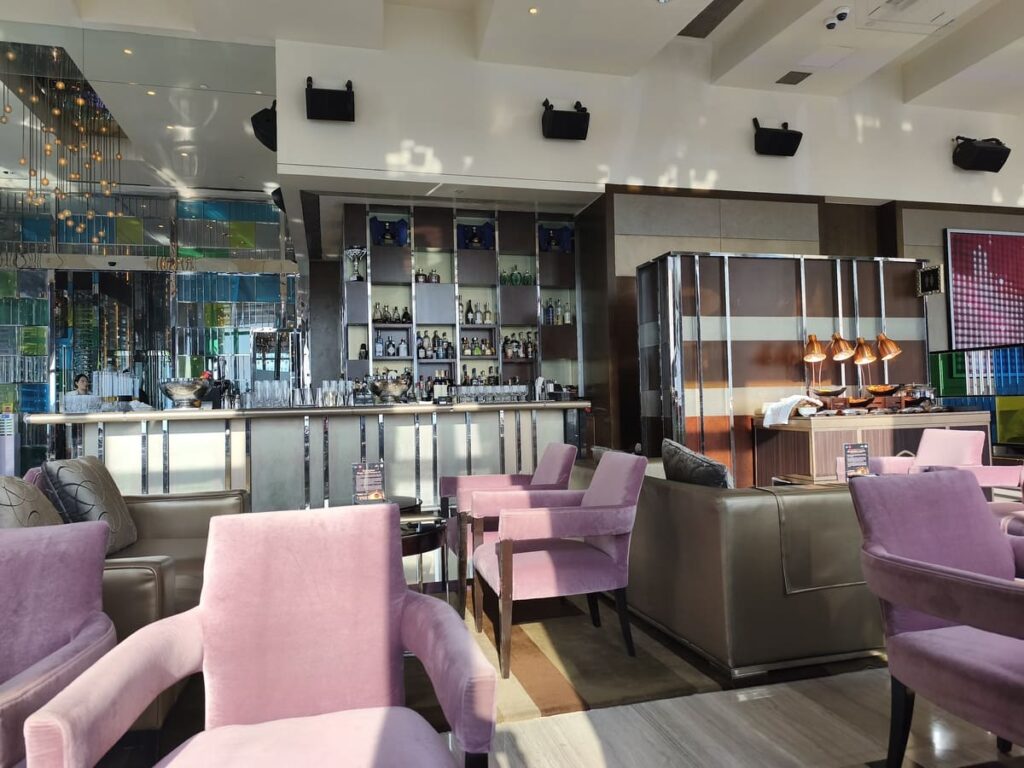
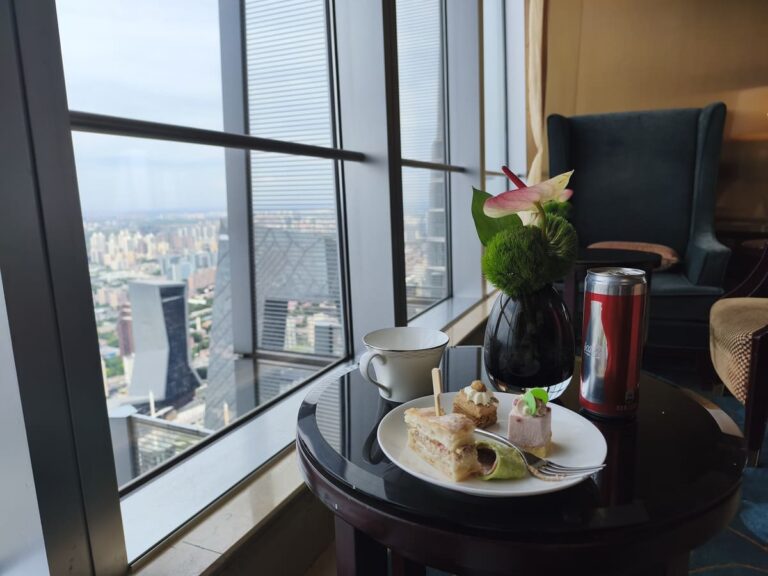
Highlights were the inluded breakfast (both a very comprehensive buffet and a la carte), free sodas and snacks during the day in the executive lounge, and the Happy Hour with free drinks and a light meal. I did not spend any money on food or drink while staying here, taking a bit of the sting out of the high price.
But the biggest plus was definitely the view. All the public areas (on floors 64,79, 80) have wonderful views over the CBD and Beijing. And the view from my room on the 66th floor made me feel like a millionaire!
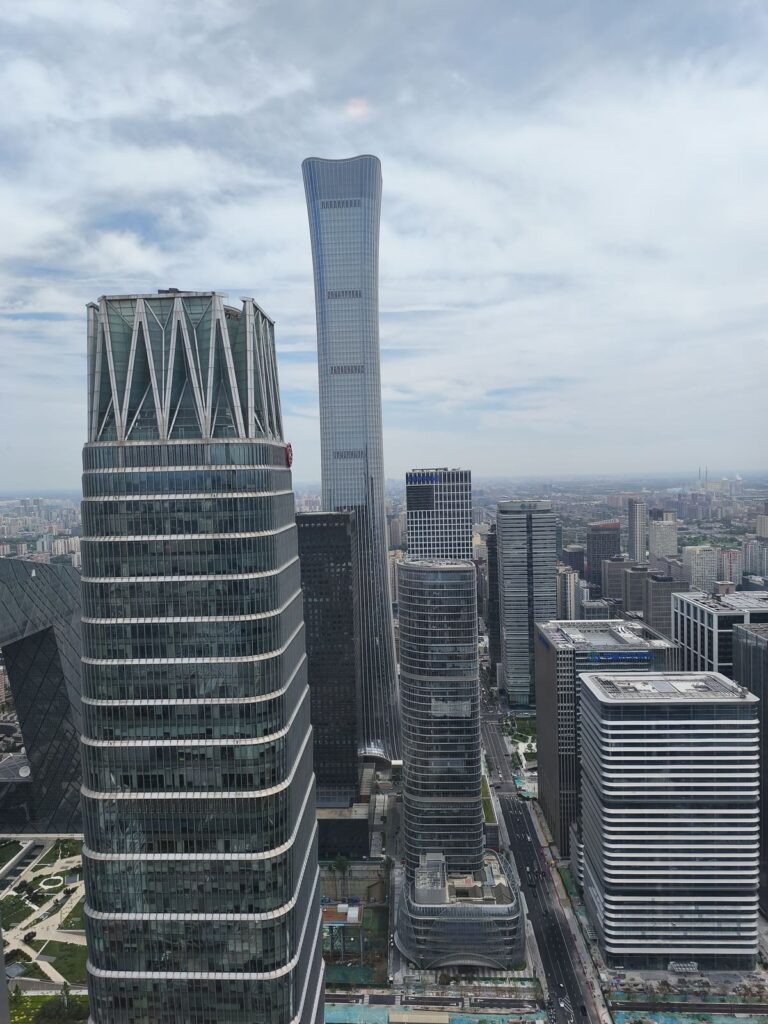
While finding the metro can be a bit tricky, it is not far away and the hotel is attached to the China World Mall, one of the nicest malls I visited during my time in China. Overall, this is definitely my top recommendation if budget allows!
Beijing CSN Pearl Hotel – 1 night
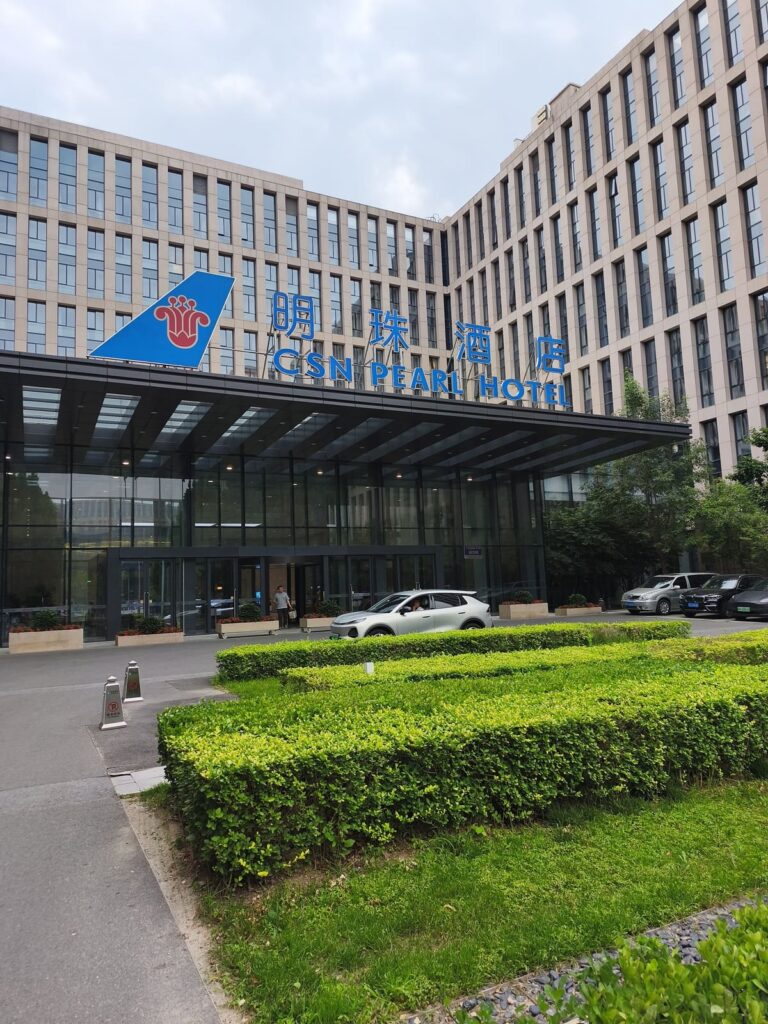
I spent the last night of my trip at the Beijing CSN Pearl Hotel at Daxing Airport and paid USD 40.46 for that stay. This was a nice upscale but not luxurious airport hotel and ticks all the boxes for overnighting before or after a flight.
Check-in was efficient and friendly and there is a convenience store attached to the hotel so you can get drinks or snacks. My main reason for choosing this hotel was that the free airport shuttle goes every 30 minutes around the clock. So no need to call/book or make a reservation!
The price was very attractive and I was happy with my stay. However, this is purely an airport hotel and very removed from anything else. So do not make the mistake of booking there with the intention of touring Beijing. There are plenty of inexpensive places much better suited for it. But when flying via Daxing I would absolutely book here again!
You can find more info on Beijing’s airports in my PEK and PKX post.
Food in Beijing
Let me first say that my food costs are probably not typical – I am still not a big eater and I really struggled with food in China. Not due to any fault of Beijing, there were plenty of restaurants and shops with food in any price-range.
But somehow the combination of unfamiliar payment options (it took me a while to get Alipay to work), unfamiliar food, different ordering processes, and just finding it difficult to decide on a restaurant led to me mostly eating snacks from the convenience store.
However, I will tell you a bit more about what I I bought to eat and how much it cost and that should help you estimate how much you will need during your visit.
In total I spent USD 236 on food and drink. That comes out to about USD 12 per day, of which I’d estimate USD 2 was soda and USD 10 food. However, on some days I spent nothing (due to meals included at the hotel), many days I spent probably about USD 6 – 8 (snacks or small local meals), and on a couple of days I spent up to USD 45.
Included food
I had some food included with either accomodation or entertainment so these meals will not show up in my food budget.
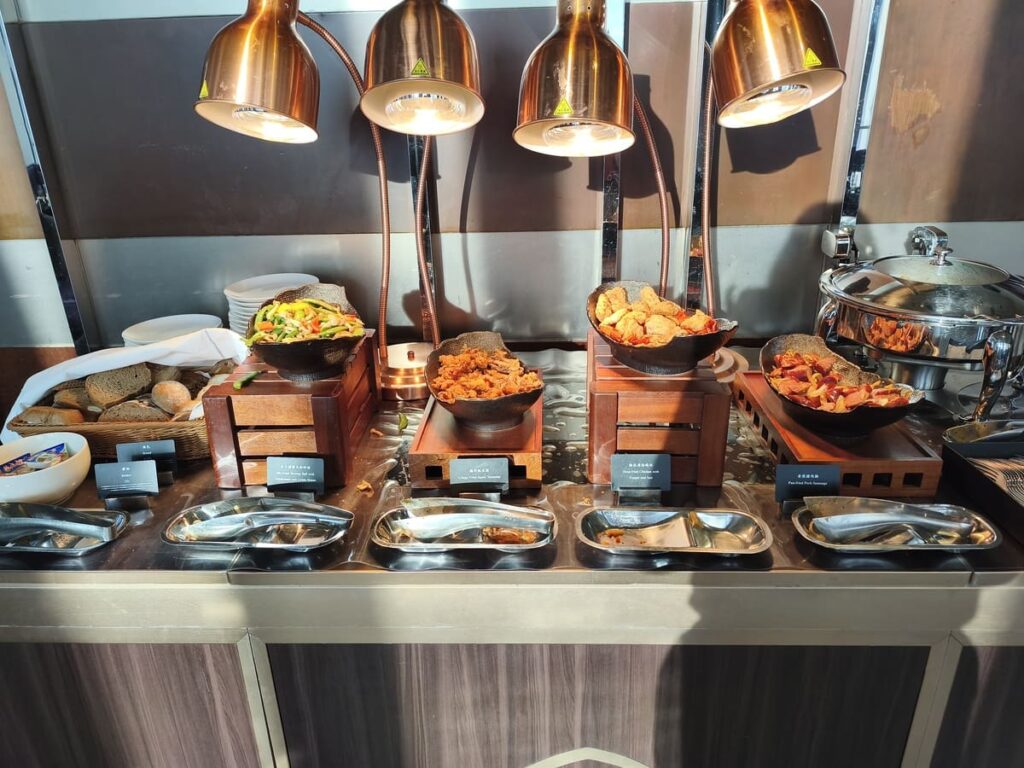
The Happy Hour buffet was plenty for a nice dinner for me
This included four breakfasts (two each at Junhefu Courtyard Hotel and China World Summit Wing). Especially the later was a big meal with a vast choice of any food imaginable and could easily serve as the main meal for the day.
At this hotel I also had snacks/afternoon tea and Happy Hour with a small buffet of cold and warm dishes included so basically spent no extra money during those two days.
I used a paid lounge at Daxing airport so had a full lunch there that also is not reflected in my food budget. And finally my excursion to the Great Wall included a lunch buffet as well (I believe it would have cost about USD 12 if paid for separately).
Expensive meals
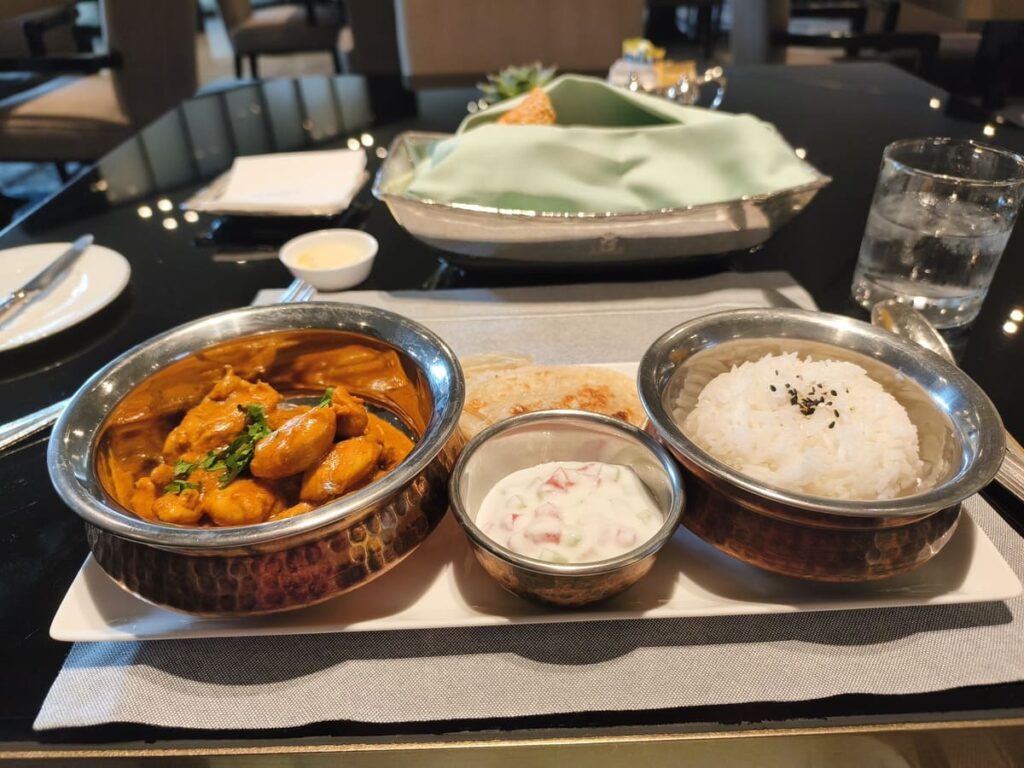
While tasty, this curry at the Peninsula Beijing did not come cheap
Given that I was having a hard time choosing a more authentic Chinese restaurant, I ate several meals at international chains or hotels. This included Pizza Hut (RMB 97), Cheesecake Factory (RMB 153), and a lunch at the Peninsula Hotel (RMB 260).
So if you want to eat two meals a day at similar places you should estimate probably around at least USD 60-80 per day.
Inexpensive meals
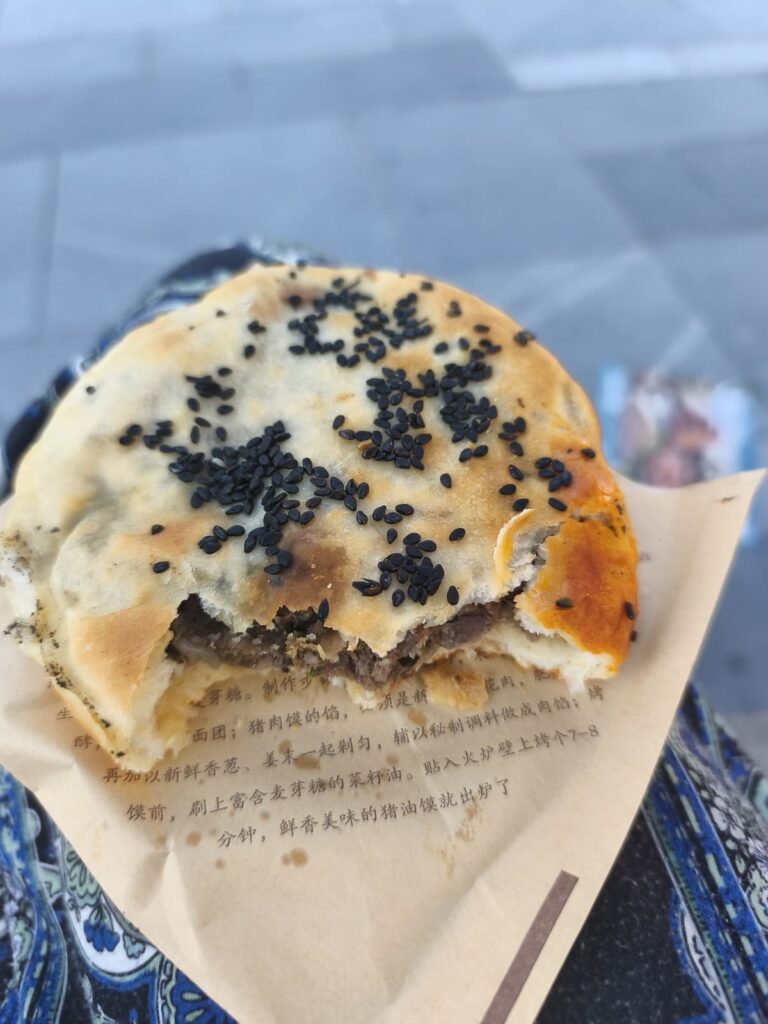
Local snacks and meals however are quite affordable
However, if you eat at local restaurants, street food, or food courts, your expenses would be significantly lower. A meat filled pastry was RMB 16 (and enough for a small meal for me). Many dishes at food courts/small restaurants were under RMB 30 so you should be able to keep your food budget to around USD 15-20.
Sodas, snacks, and Treats
As always, I had a fair number of Cokes. These were quite affordable – the regular price at stores was RMB 3 and at tourist sites they usually cost around RMB 5-8. While not expensive, having a couple a day did add up over 21 days.
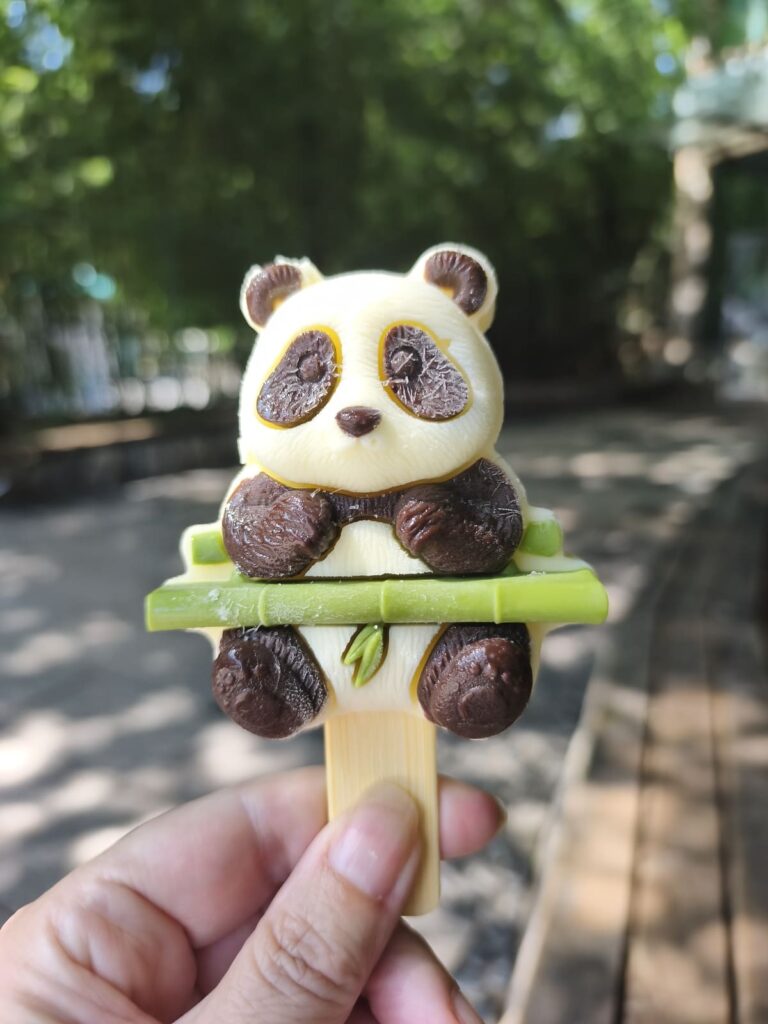
Isn’t this ice cream just adorable?
I also bought specially shaped ice cream pops at major sights (as a kind of edible souvenir). These usually cost around RMB 28.
And then I had quite a lot of snacks – like potato chips, cake slices, cookies, crackers – for meals in my hotel room.
I did not spend any money on alcohol (but did take full advantage of happy hour and lounge).
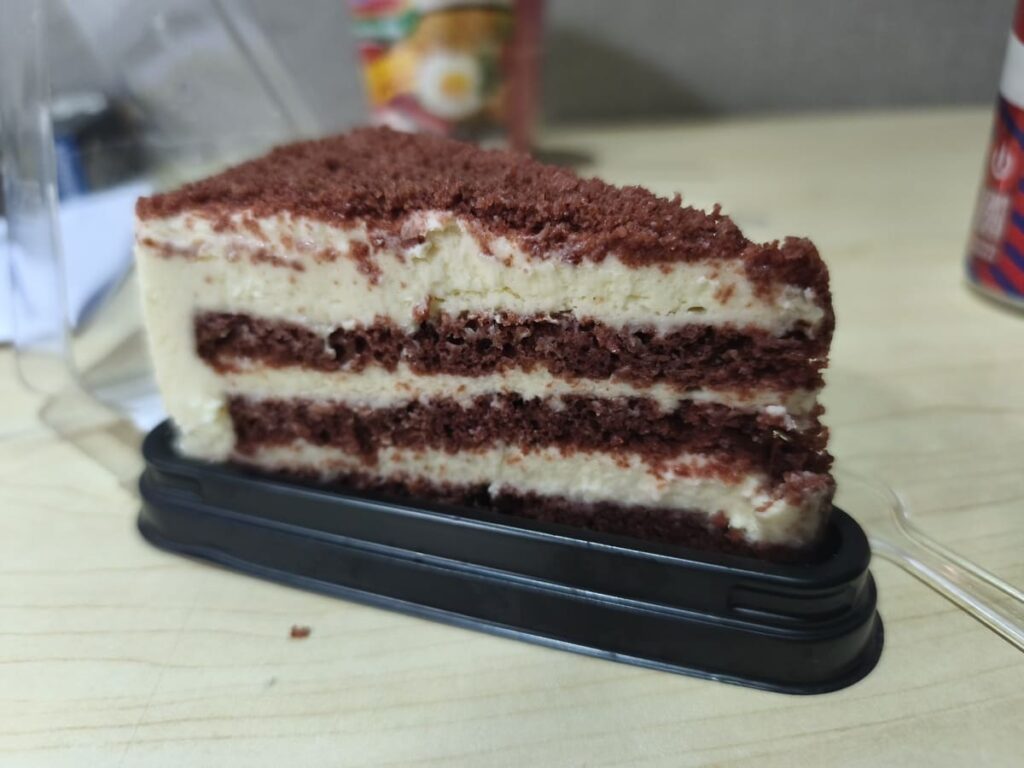
The convenience store cakes were quite tasty
As you can see, food prices vary widely and you know best how much you eat and what kind of food you prefer. I would say that USD 25 per day should be enough to eat at local restaurants, buy any snacks or treats you want, and still splurge for a couple of meals.
Activities and Entertainment
My cost for activities and entertainment in Beijing was average at USD 111. My time in China was pretty much spent as a tourist. So while I did have a couple of days with just low-key activities (like a nearby mall or park), I did do a fair amount of touring most days.
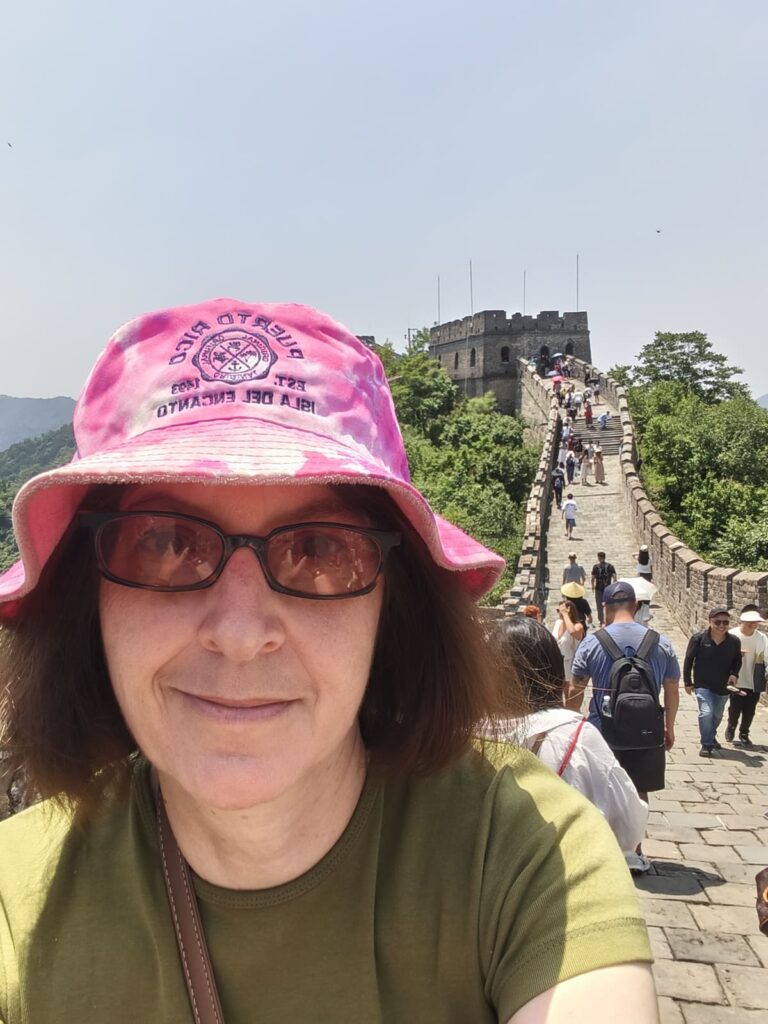
The Great Wall is a bucket-list item that most Beijing visitors will want to visit
My biggest expense was an organized excursion to the Great Wall at Mutianyu which I booked via GetyourGuide. I paid USD 29.50 for this tour. It included the bus ride from Beijing to the tourist center for the wall, shuttle transfer to the wall, entrance to the Great Wall, as well as a very nice lunch buffet. All in all, I thought it was very good value! You can read my (very) detailed review in this post.
However, there is an additional charge of RMB 140,000 for the cable car to get up to the wall. While you could theoretically hike up, I would not recommend this for most travelers as it was plenty exhausting to walk along the wall after the cable car. And the cable car ride was not that short so hiking up is sure to be a major endeavour!
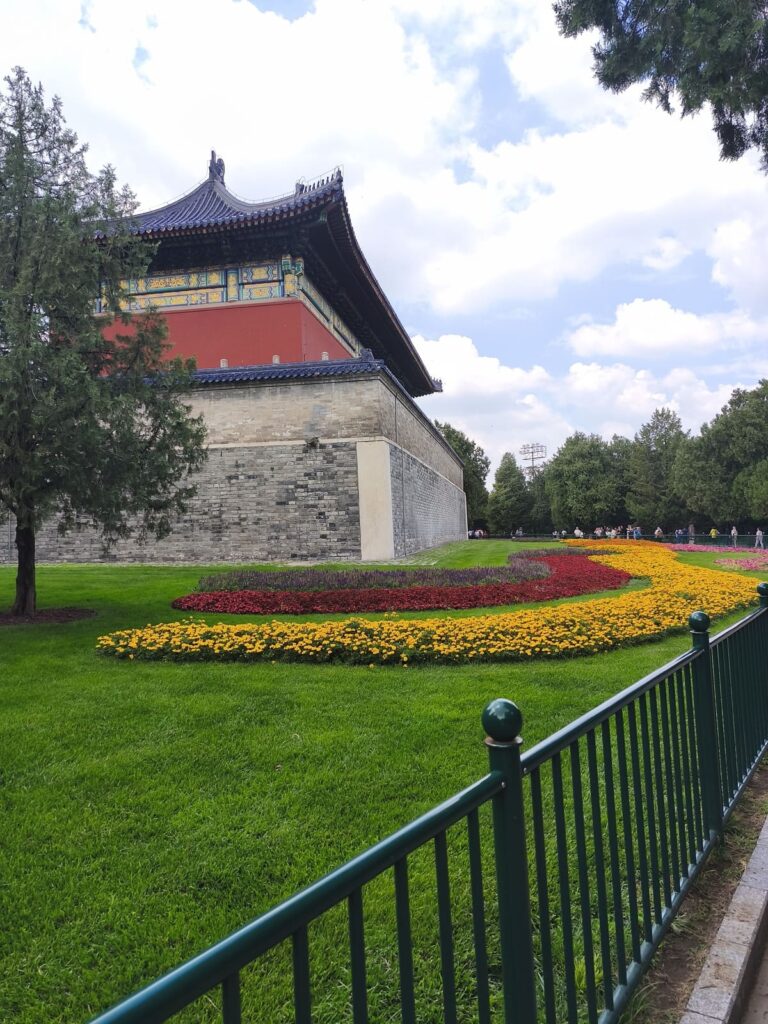
Temple of Heaven is one of Beijing’s biggest sights
Aside of this bigger excursion I spent a total of USD 60 for various entrance tickets. Most of these I bought ahead of time via Trip.com. You may be able to save a little money by buying the tickets yourself on the day at the attraction, but personally I recommend ordering them ahead, especially if your time in Beijing is limited. It would be a pity to miss out on a major sight just because you wanted to save one or two dollars!
I would definitely recommend buying your ticket to the Palace Museum (= Forbidden City) at least a week or so before your trip. Not only is this Beijing’s biggest attraction, but it also is usually sold out.
Here is a short overview of the tickets I bought and how much I paid. Any tickets priced in USD I bought on trip.com, the RMB tickets I just got on site.
| Attraction | Price |
| Palace Museum | USD 15.20 |
| Temple of Heaven | USD 7.97 |
| Lama Temple | USD 8.57 |
| Prince Kung Mansion | USD 5.90 |
| Beijing Zoo incl. pandas | USD 5.90 |
| Old Summer Palace | RMB 25 |
| New Summer Palace | RMB 60 |
| Beihai Park | RMB 20 |
| Jingshan Park | RMB 2 |
| Zhongshan Park | RMB 3 |
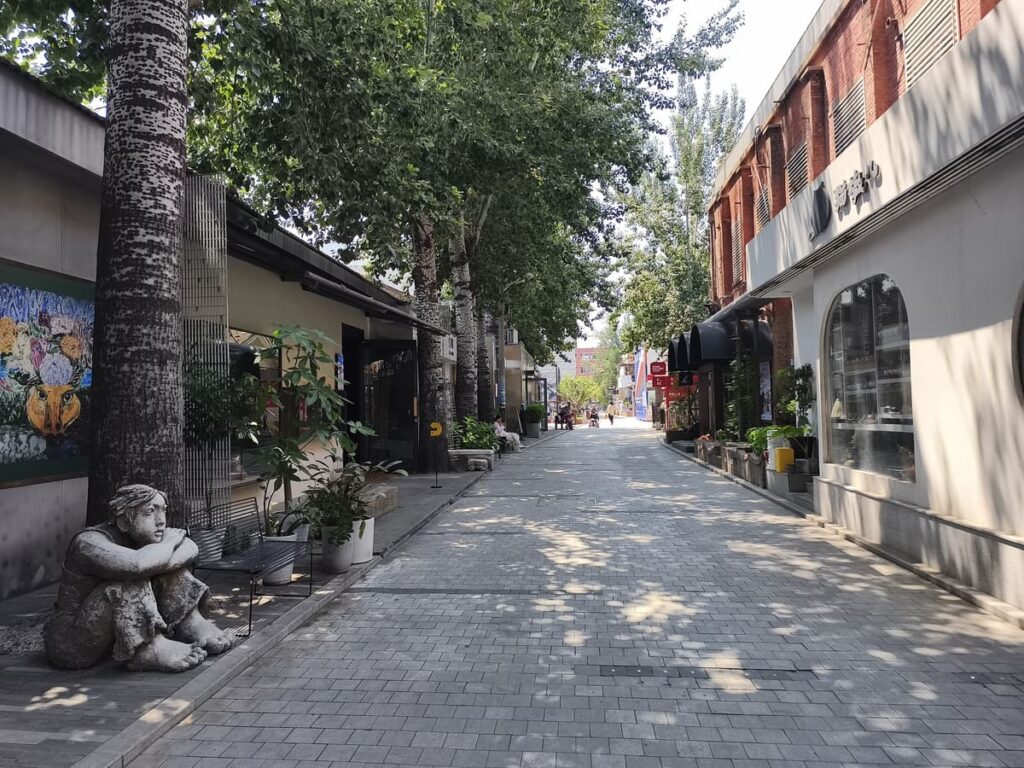
798 Art Zone was a lot of fun and is definitely worth a visit!
In addition to these, I also visited quite a number of Beijing’s many free sights, like Ritan Park, Shougang Park, or the 798 Art Zone.
USD 100 should be enough to visit most of Beijing’s big sights independently. You will spend quite a bit more though if you prefer organized tours or want to go out at night.
Miscellaneous
Transportation
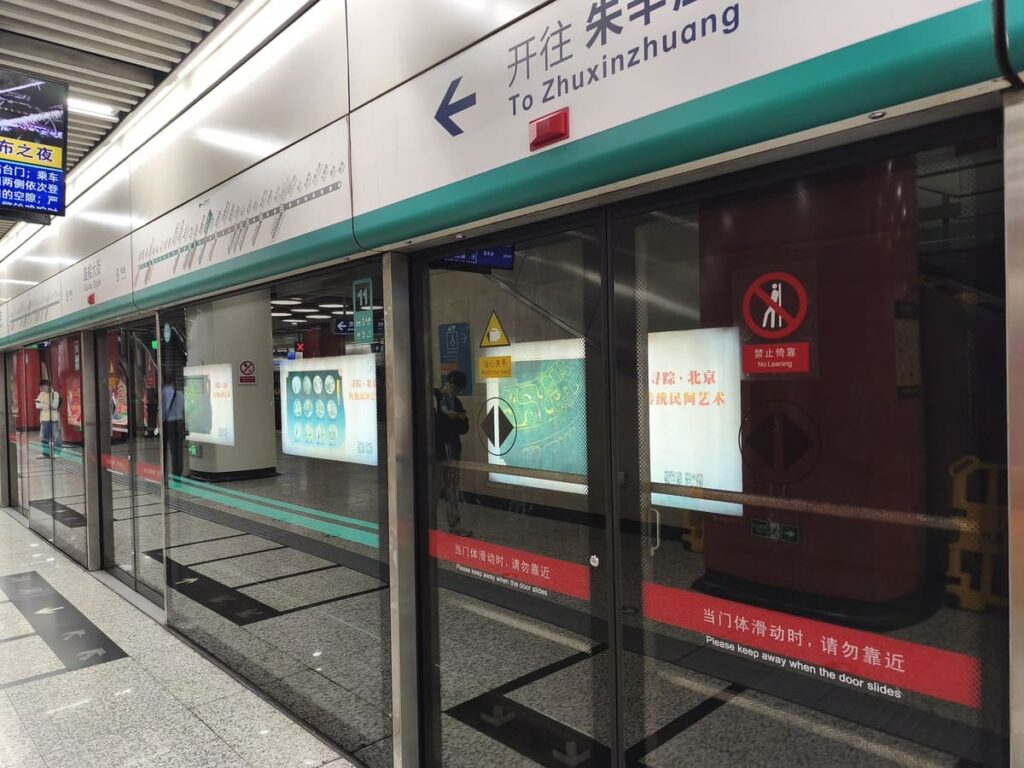
Public transportation in Bejing is excellent. While there is an extensive network of buses and rental bikes at every station, I only used the subway. Extremely safe, clean, and frequent it was all I needed. If you want to know more about how to get around Beijing, I do have a post explaining everything in detail.
Beijing’s public transit was also the most affordable I have seen in a long time. Most trips across town cost RMB 5 at most. During my three weeks in Beijing I used the subway almost every day and my total transportation cost just came to RMB 210!
I did spent RMB 20 right after arrival to get a travel card that can be topped up and used to pay by tapping at the turnstyles. Alternatively, you can also pay via credit card or phone or just buy single tickets. Personally, I prefer not having to take my credit card out all the time and not being reliant on my phone so the travel card was ideal.
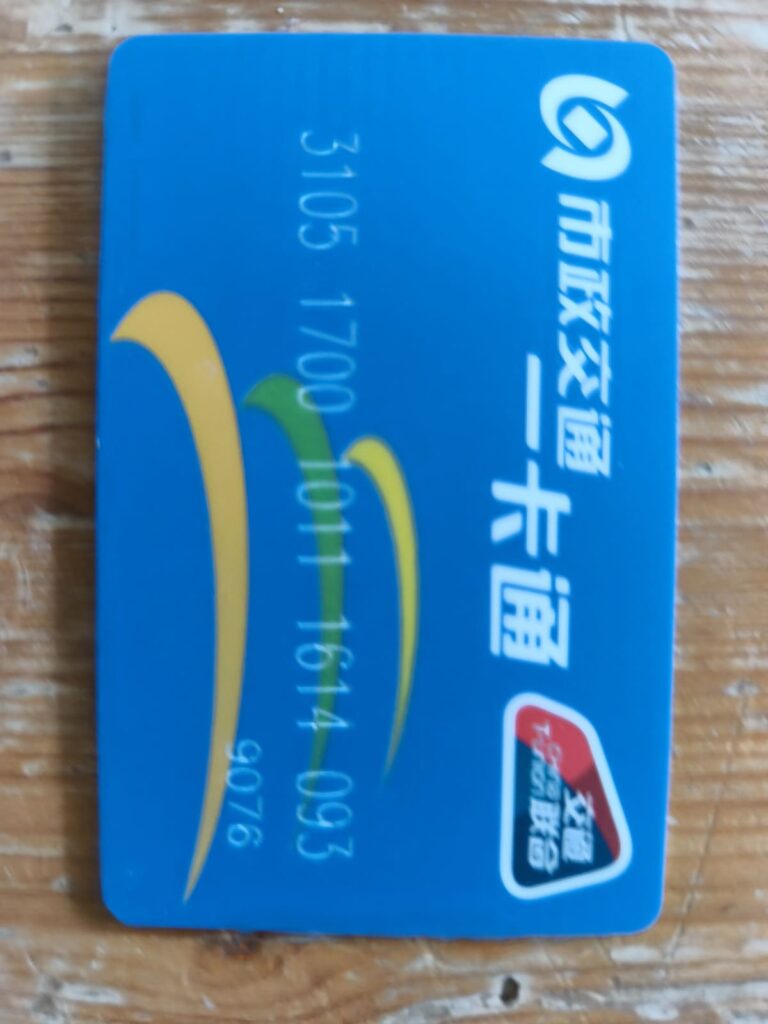
This card made it easy to pay for all rides
I added RMB 80 to start and topped up a couple of times for a total of RMB 170. In addition I paid RMB 25 separately for the trip from Peking Airport to the city (where I bought the travel card). So all in all I spent RMB 210 on transit during my stay in Bejing.
The biggest expense here was the trip from and to the airport which cost RMB 25 to PEK and RMB 40 to DAX. I believe I could have returned my travel card and got the RMB 20 back but did not try this so am not quite sure.
I think this is about average. The price does not fluctuate much according to distance and given the low cost of each individual trip, it would be hard to save any significant money (or spend a lot more). Public transit will not impact your budget in a meaningful way.
Communication
Esim
Communication is of course quite a different concern in China. During the rest of my Asia trip I mostly used Wifi and only needed data for navigation and the occasional google search when out and about.
However, the best way (as of this writing) to navigate the restrictive internet regulations in China is to use an esim. Esims do not have the same restrictions so you won’t even have to worry about VPNs (or not much).
Everywhere else in China I used an esim card from Saily and was very happy with it. However, for the China leg I decided to purchase an esim from Trip.com, mostly because they are optimized for China. Also if you do lose connection from your esim and have to contact support via regular Chinese Wifi, Trip.com will not be blocked (I do not know whether this would work for Saily or no).
All in all, I was very happy with my Trip.com esim. I was unsure how much data I would need so got the 100 GB per day version. Looking back, 3 GB would probably have been enough as I usually used less than that even though I used my phone as a hotspot for my laptop and streamed shows etc. Still, better a little bit too much than not enough!
For 20 days of this Mainland China 100 GB esim I paid USD 37.51. A lot more than in any other country I visited but still not a huge amount and definitely worth it. The only mistake I made was to only get 20 days instead of 21 so my data ran out while I was still in Bejing. This was slightly bothersome and next time I would make sure that the duration covers my entire trip.
I did off and on lose connection on my data. Usually waiting a little or rebooting my phone fixed the issue. Once I had to reinstall the esim. So it wasn’t quite perfect but it did work a good 95% of the time and made my trip much easier.
VPN
I did also pay for a one month VPN from Mullvad which at the time I left for China was the most recommended. Which VPN work in China (or if any do) can change quickly so you are best off checking on current forums before you travel.
Mullvad did work for me those times I lost access to data (and on the last day) but it usually took a while to get a secure connection and it did tent to drop. The one month fee was EUR 4.99.
However, while VPN are only of limited use for accessing “Western” websites (your esim will solve that problem for you) I do recommend you get one in order to access your regular accounts. For example I needed to buy a German train ticket and the German website would give me an error message if I did not use a VPN.
In addition to Mullvad I also have ExpressVPN which I use to access my Viki/Netflix etc. accounts. ExpressVPN however does NOT help you to access Google etc. in China so it is best as a secondary VPN in this case.
My recommendation is to get an esim with plenty of GB covering your entire stay and the VPN recommended at the time of your trip just in case something goes wrong or to access your regular accounts which may ban Chinese traffic.
Laundry
I got all my clothes freshly laundered right before I left Bali and so managed with just one time doing laundry at the AC Art Museum Hotel which offered free laundry facilities so no extra cost here.
bank Fees
I booked all my hotels, my esim, and most of my excursions/attraction tickets on Trip.com using PayPal. For the rest I used a combination of Alipay (linked to my German credit card) and cash.
I withdrew cash twice while in Beijing, RMB 1,200 and RMB 600 respectively. Each withdrawal incurred fees of EUR 2.50 for a total of EUR 5.
If you manage to get Alipay working right away and have more trust in your credit cards, you could probaby forego cash completely and save the withdrawal fees.
Souvenirs
I bought quite a bit of souvenirs in Bejing, definitely more than during other legs of my trip. This was mostly because I was heading home and wouldn’t have to drag everything around with me any longer.
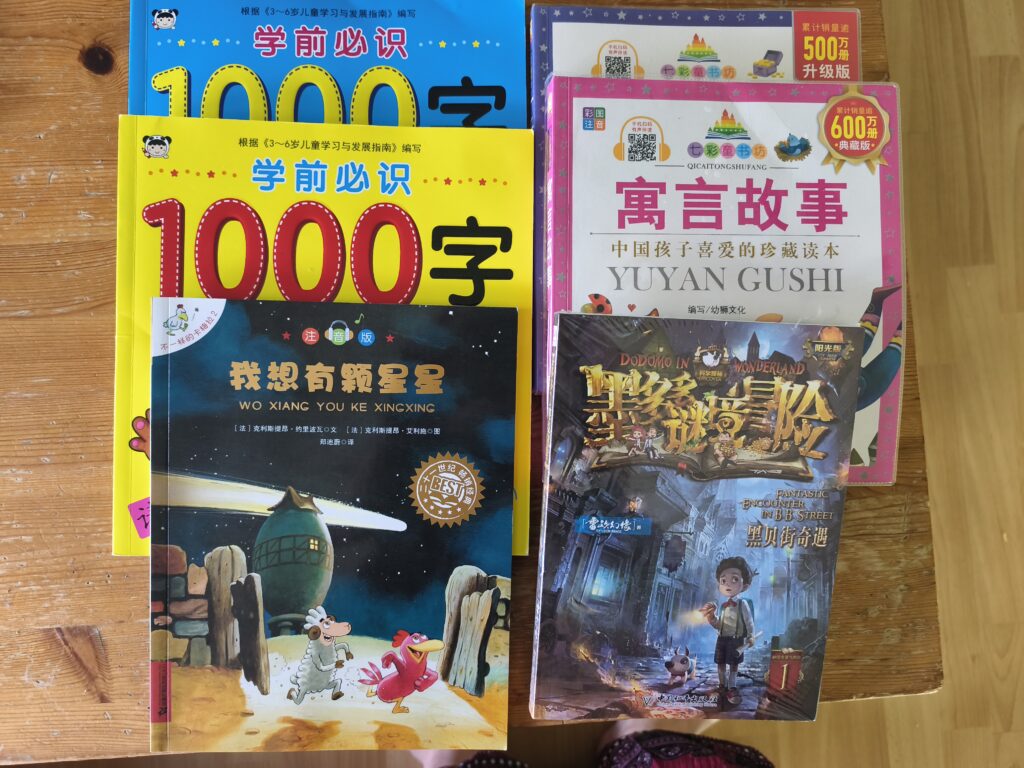
I mostly bought two kinds of things: candy as presents for my family and some early-reader books for myself.
The six books came to a total of RMB 151. For the candy I spent RMB 100. I also spent RMB 49 on a stamp book, which was a great idea but unfortunately didn’t really get used. So souvenirs totaled RMB 300.
Insurance
Probably the MOST IMPORTANT expense on any international trip is decent health insurance. You are always just a small accident or pesky virus away from incurring a huge bill!
Normally, I use an inexpensive annual policy (under $20) for travelling but that only covers trips up to four or six weeks. So for my six months in Asia I signed up for an extended travel insurance policy. I used a German provider as it was the cheapest I could find and paid EUR 55 per month.
However, I believe this can only be bought if your home address is in Germany. For international travellers the most popular health insurance for long-term travelers/digital nomads seems to be Safety Wing. You can use their pricing calculator to get an estimate for your personal budget.
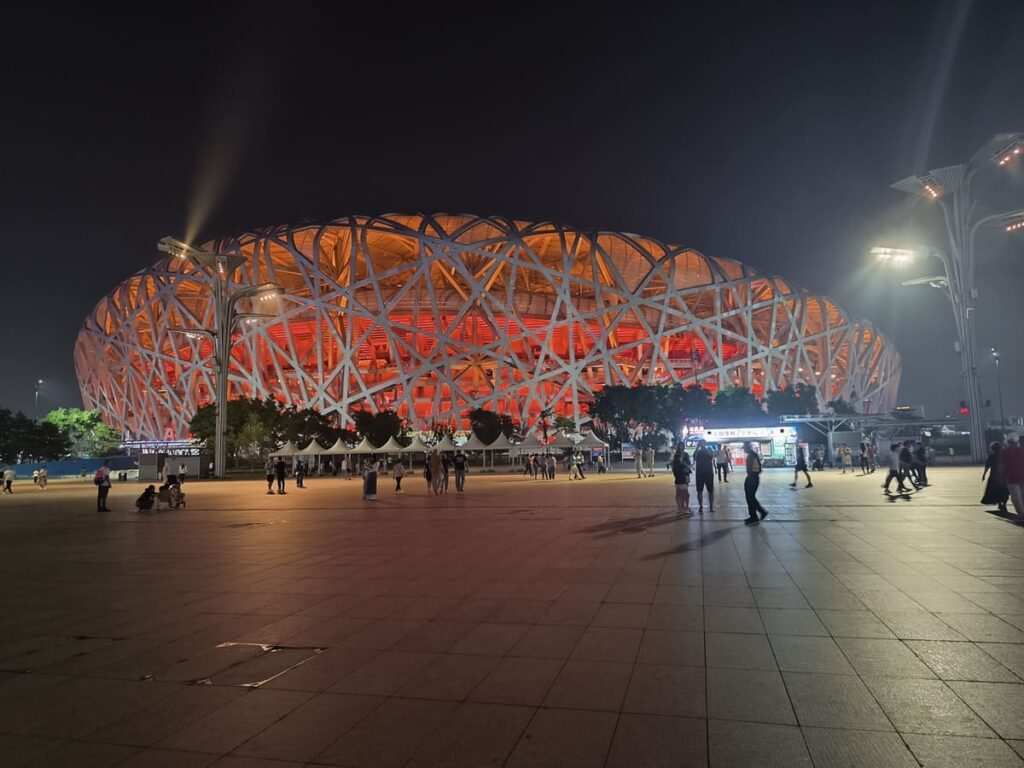
Beijing has lots to see and do and many sights are completely free of charge
Total Cost for 3 weeks in Beijing
So how much did I spend in total? Below I am adding up all the components mentioned above – I have converted them to USD (and rounded to full dollars) to make it easier to read. Obviously, exchange rates fluctuate etc. but it should give you a general idea of what to expect for a three week vacation in Beijing.
| Total Expenses – 3 weeks | Beijing | |
| Accomodation | ||
| Youfang Hotel (4 nights) | 283 | |
| Junhefu Courtyard Hotel (2 nights) | 102 | |
| 7 Days Premium (Beijing Zhonggucancun Suzhoujie) (9 nights) | 372 | |
| A.C. Art Museum Hotel (2 nights) | 147 | |
| China World Summit Wing (2 nights) | 550 | |
| Beijing CSN Pearl Hotel (1 night) | 40 | |
| 1,494 | ||
| Food | 236 | |
| Activities and Entertainment | ||
| Excursion Mutiyanu Great Wall | 30 | |
| Additional Cost Great Wall | 21 | |
| Entry Fees | 60 | |
| Total for Activities and Entertainment | 111 | |
| Miscellaneous | ||
| Transportation (without flight to/from Beijing) | 31 | |
| Communication | 43 | |
| Laundry | – | |
| Bank Fees | 6 | |
| Souvenirs | 44 | |
| Total Miscellaneous | 122 | |
| Insurance | 49 | |
| TOTAL EXPENSE | 2,012 |
How typical are my Expenses?
Obviously, I don’t know your spending habits. So I can’t say whether USD 2,000 will be enough for three weeks for you. Here are a couple of things to consider:
- My accomodation cost was probably average. However, I reached that average by combining budget hotels with more averagely priced properties and adding on a two day splurge. You definitely could save quite a bit here if you skipped the 5 star hotel! On the other hand, if this is a bucket-list trip for you maybe you would prefer a fancier place than a budget chain room.
- I would say you could stay in safe, clean, well-located and perfectly acceptable hotels for around USD 50 on average per night. If you want something a bit nicer or in a prime location, USD 75 is probably about the price point. However, if you are looking to treat yourself with true luxury, you will have to budget USD 200+ per night.
- I ate a lot of snacks and convenience store food! The rest of my meals were a mix of high-priced international restaurants and a couple of cheaper local snacks.
- My transportation cost was probably average for three weeks. I did stay in my local neighborhood some days. However, the metro is so inexpensive that taking a couple trips more or less won’t have much impact.
- My expenses for fun and entertainment were average. I saw all the main sights and entrance fees are generally quite low. I did one organized excursion to the Great Wall at Mutianyu and think most visitors will have that on their bucket-list. The only reason your expenses will be higher is if you do more organized excursions (some can be quite pricey) or if you are more of a night-owl and go out in the evening.
- Expenses for miscellaneous were slightly higher than during my other stays. I did a bit of shopping (but probably less than most) and of course the esim was not as cheap as in other places. The Trip.com esim I bought was one of the least expensive ones I saw but you may need less data than I bought (I barely used 3 GB per day but had 100 GB available).
- Insurance will vary quite a bit but you can get a quote before your trip so won’t be surprised later on.
USD 2,012 covered my three week vacation in Beijing. I had a great time and definitely did not skimp. Your budget will depend heavily on your choice of hotels (budget, mid-tier, luxury, or a crazy mix of all of these). My budget covers all but a full-on luxury hotel stay so should be doable for most. The one aspect most may spend more is food. I did not eat very much and stuck mostly to snacks and convenience store food. If you watch your budget and mostly eat at local food courts, you won’t need much more than me. However, if you eat in hotel restaurants or international chains, your food budget will be quite a bit higher than mine. Still, I think USD 2,000 – 2,500 for a three week vacation should be doable for most.
Some Current Prices in Beijing
To help you out a bit when you work on your personal budget, I have compiled a short table with average prices for common purchases/expenses (as of June 2026):
| Item | Typical Cost in RMB |
| Single Can of Coca-Cola | 3 |
| Pizza and soda at Pizza Hut | 97 |
| Chicken Caesar Salad at Cheesecake Factory | 153 |
| Meat Bun | 15 |
| Caramel Frappuchino Starbucks | 33 |
| Small bag of chips | 8-12 |
| Meal at food court (taco) with soda | 28 |
| Stamp Collecting Book | 49 |
| Chinese children’s book | 25 |
| ATM Withdrawal Fee | 2.50 EURO |
| Palace Museum Ticket | USD 15.20 |
| Zoo | USD 5.90 |
| Temple of Heaven | USD 7.97 |
| Entrance Old Summer Palace | 25 |
| Transit Card for Metro | 20 |
| Average Metro Ride (one way) | 5 |
| Trip CBD to Daxing Airport | 40 |
| Airport Express PEK | 25 |
Beijing offers lots of history, beautiful parks, modern malls, and so much more
Conclusion
Beijing was wonderful. It definitely is vastly underrated and should be considered on the same level as London or New York. The biggest surprise was how green the city is. I don’t think I have ever been anywhere with so many public parks!
As with most big cities, vacation costs can vary widely based on budget and taste. You can definitely stay at inexpensive (but perfectly fine hotels), tour all the main sights, and eat full meals for well under USD 100 per night. On the other hand you can splurge on five star hotels, Michelin restaurants, and curated excursions and your cost will be significantly higher.
For once, it would not be hard to spend less than I did. I think USD 2,000 was about average for a three week visit but if necessary I could have probably managed with USD 1,500 without having to skimp too much.
The main reason I spent more in China than in the other destinations during my trip was that I treated it as a vacation, went sight-seeing almost every day, and splurged with a luxury hotel stay at the end.
Don’t leave home without it
I can honestly say that I would never go on a trip without the appropriate insurance. Needs vary and there are many different insurance products. Personally, I think medical insurance at a minimum is essential. It only takes a small injury or a pesky virus to rack up the bills!
World Nomads offers coverage for more than 150 adventure activities as well as emergency medical, lost luggage, trip cancellation and more and is often recommended for international travelers who want comprehensive protection.
SafetyWing is a budget-friendly option offering a subscription model and is especially well-suited to long-term travelers or digital nomads.
As always, read the fine print, check your existing coverage, and make sure it is the right product for you.
I receive a fee when you get a quote from World Nomads using this link. I do not represent World Nomads or SafetyWing. This is not a recommendation to buy travel insurance.