IS THE LANNA TRADITIONAL HOUSE MUSEUM WORTH A VISIT?
Some of the links in this post are affiliate links, which means I earn a small commission — at no extra cost to you — if you make a booking or purchase through them. I only recommend services and products that I personally use, trust, or believe will benefit you. Thank you!
Chiang Mai is a dream for visitors – hundreds of fascinating temples, dozens of bustling markets, and several must-see sights easily accessible on day tours. But the city also has some lesser known smaller attractions, including the Lanna Traditional House Museum.
But should you make time in your itinerary to see it or should you concentrate on the more famous attractions?
Why I visited the Lanna House Museum
Most people spend three or four days in Chiang Mai but I was spending four weeks in one place. So surely I had time to see it all, right?
Spoiler alert, I didn’t. Not even close. But at the beginning of my trip I was still optimistic that I would be able to fit it all in. And some of the other sights were a bit intimidating. Either they were expensive (day-trips), hard to get to (Doi Suthep), or just a bit daunting (how do you even visit a temple?), so I decided to start with the Lanna Traditional House Museum. It is close to the Old Town just South of the popular Nimman area, fairly inexpensive, and easy to figure out.
Read on to find out what it was like and what to expect!
Visiting the Traditional House Museum
What is the Lanna Traditional House Museum?
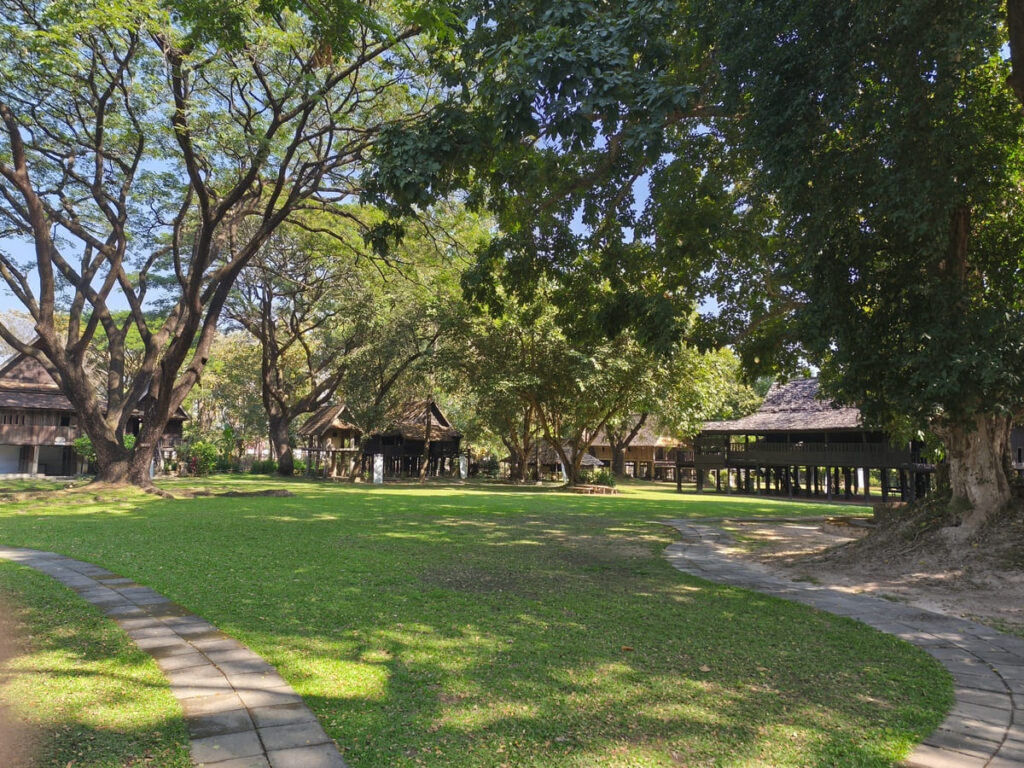
It’s an open-air museum in a park like setting with various old buildings that show the typical Lanna style architecture of Northern Thailand.
Getting there
As mentioned before, this museum is fairly central, just south of Nimman and to the West of Old Town. I was still a bit nervous about the various transportation options so walked there. It was doable but a bit of a hike.
If you are staying either in Nimman or at the Western edge of Old Town, walking is a pretty good option. If you are coming from a bit farther (like for example the Night Bazaar area like me), I would recommend you either use one of the red Songthaew shared buses or get a Grab. Especially if you are visiting during the hotter season or in the middle of the day.
Buying a Ticket
You can buy a ticket right at the entrance, no need to pre-book. At this time, the museum is open from 8:30 am to 4:30 pm every day but Monday (but as always do double-check the current times to avoid disappointment).
Tip 1: Make sure to bring smaller bills!
The museum is one of Chiang Mai’s fairly inexpensive activities. A regular adult ticket for tourists was 100 Baht. Here my trip almost got derailed as there was a sign at the ticket counter that they did not accept any 1,000 bills. Luckily, I happened to have some smaller bills along or my trip would have ended right there!
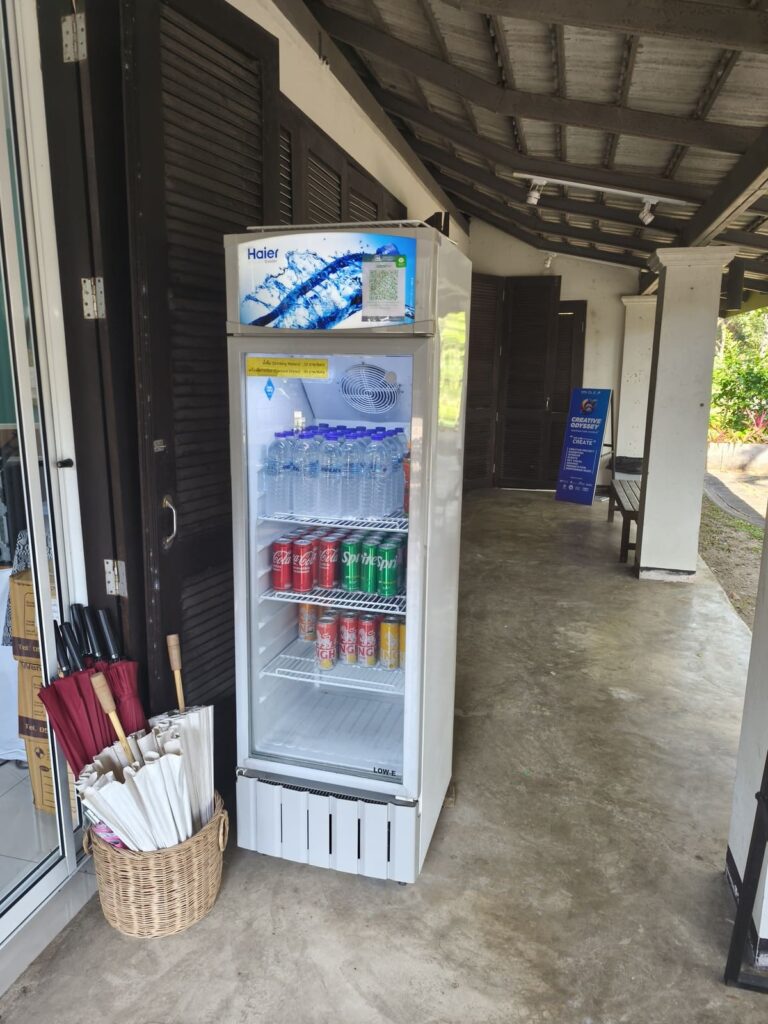
If you forgot to pick up something to drink you can buy a water or soda right at the entrance
I stopped at a 7-Eleven a block or so earlier to buy some water. However, if you forgot they do sell some drinks at the museum.
How long do you need for a visit?
If you want to just have a quick peek at most of the buildings and quickly walk through, you’d probably be done in about 30 minutes. On the other hand you could easily spend 2 hours here if you wanted to really soak up the atmosphere. I spent about 90 minutes there (and I am a rather slow traveler).
Touring the Museum
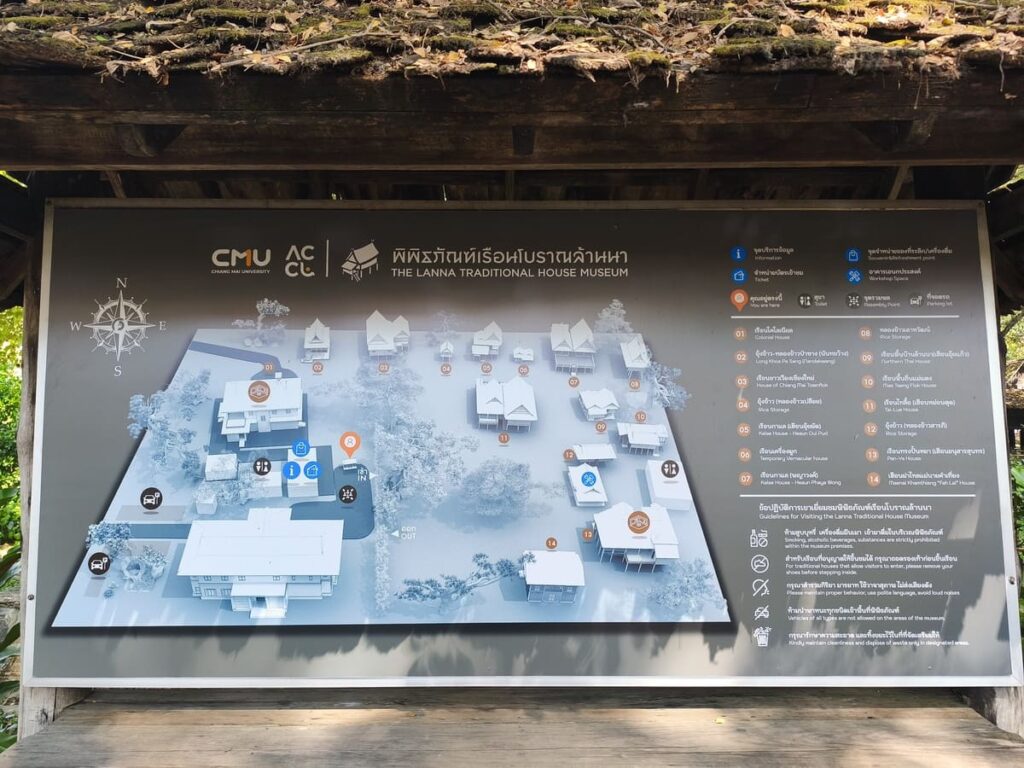
As you enter the site, you will see a map of the museum. Being very easily led, I started at building #2 in the upper left on the photo above and made my way around clockwise.
Tip 2: Start with number 13/14 and tour the museum counter-clockwise.
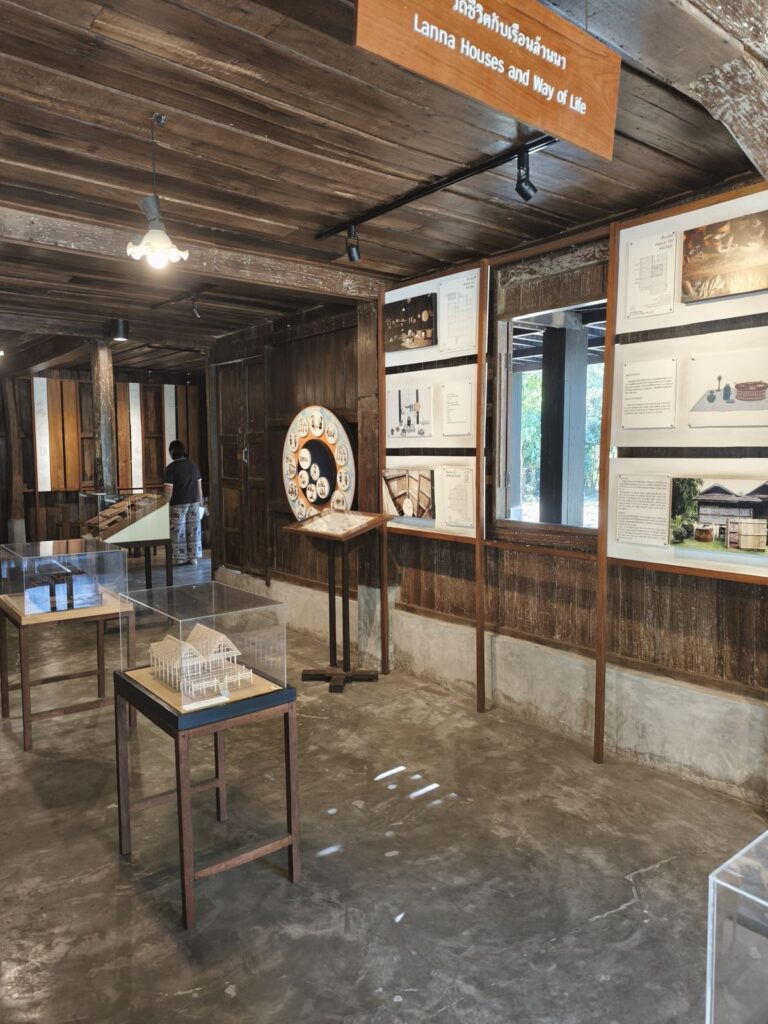
Exhibition about Lanna Way of Life
My recommendation would be to go the other way around instead. Mostly because the bottom-right building includes a mini-museum and I would have prefered to start with that. By the time I got there, I was kind of already done with acquiring more information so just skimmed over it. I think I would have gotten more out of it at the very beginning.
The second reason is that Also, I especially liked the calm vibe of building #2 so would have liked ending with it.
But overall it won’t make too much of a difference so just go for whichever. The park is expansive but not huge. There is some walking involved but nothing that could be called a hike. Everything is flat and easy to visit (other than some steps into houses) so you can easily backtrack if you want to.
The Houses
The wooden houses in this museum were acquired from other areas in Northern Thailand and then brought here and rebuilt. You will see bigger and smaller houses, some regular residential buildings, and others that were used for storage.
You can enter most of the buildings. Don’t forget to take off your shoes though!
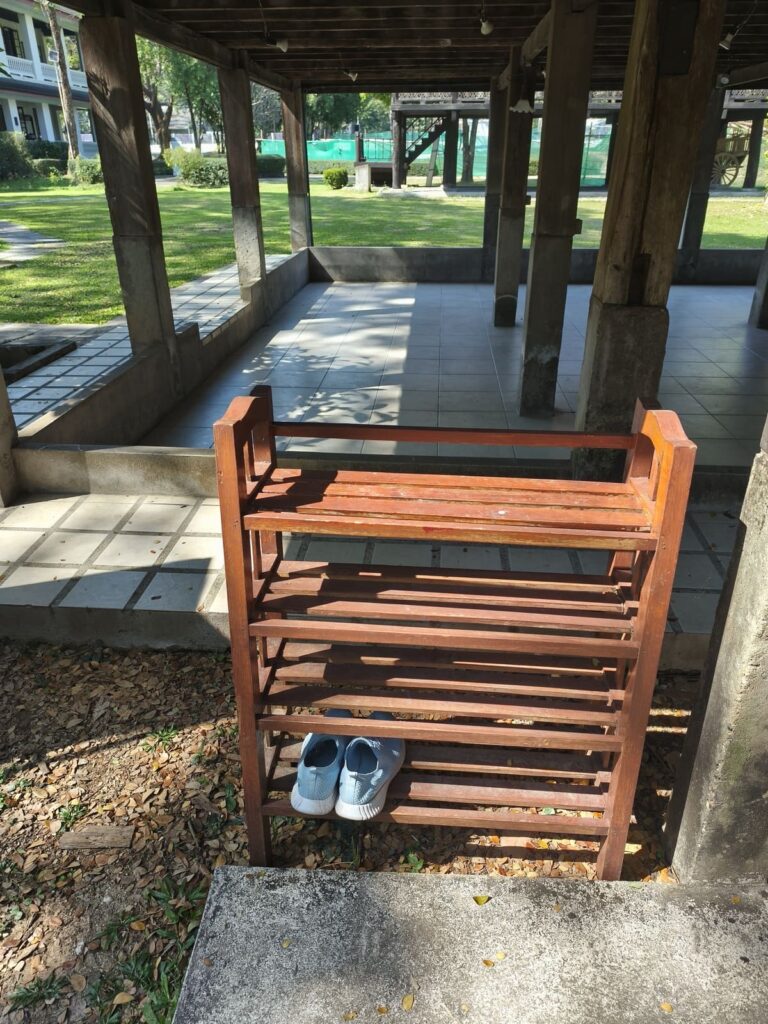
You are expected to take off your shoes before entering the houses
Tip 3: Wear shoes that are easy to take on and off as you will have to do so numerous times.
At each house you will see a sign in Thai and English with the name and some information about the history and architecture of the building. How interesting you find this will depend on your personal interest, i.e. it is informational but not mega engaging.
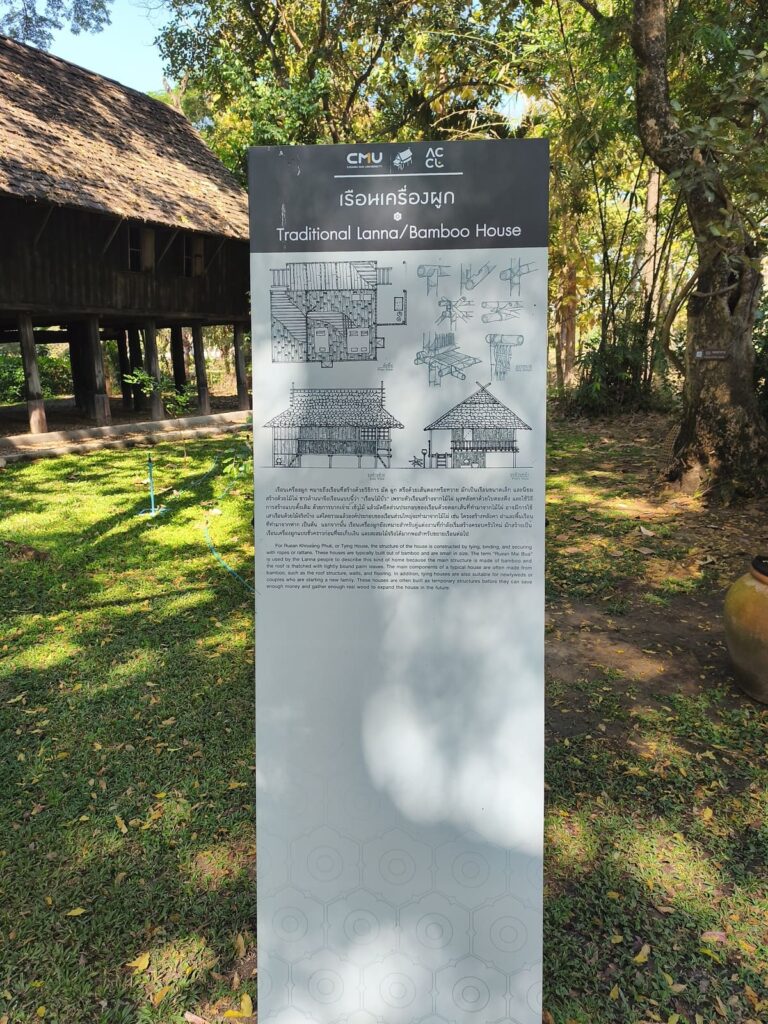
The buildings exemplify the traditional Lanna architecture in the Chiang Mai region.
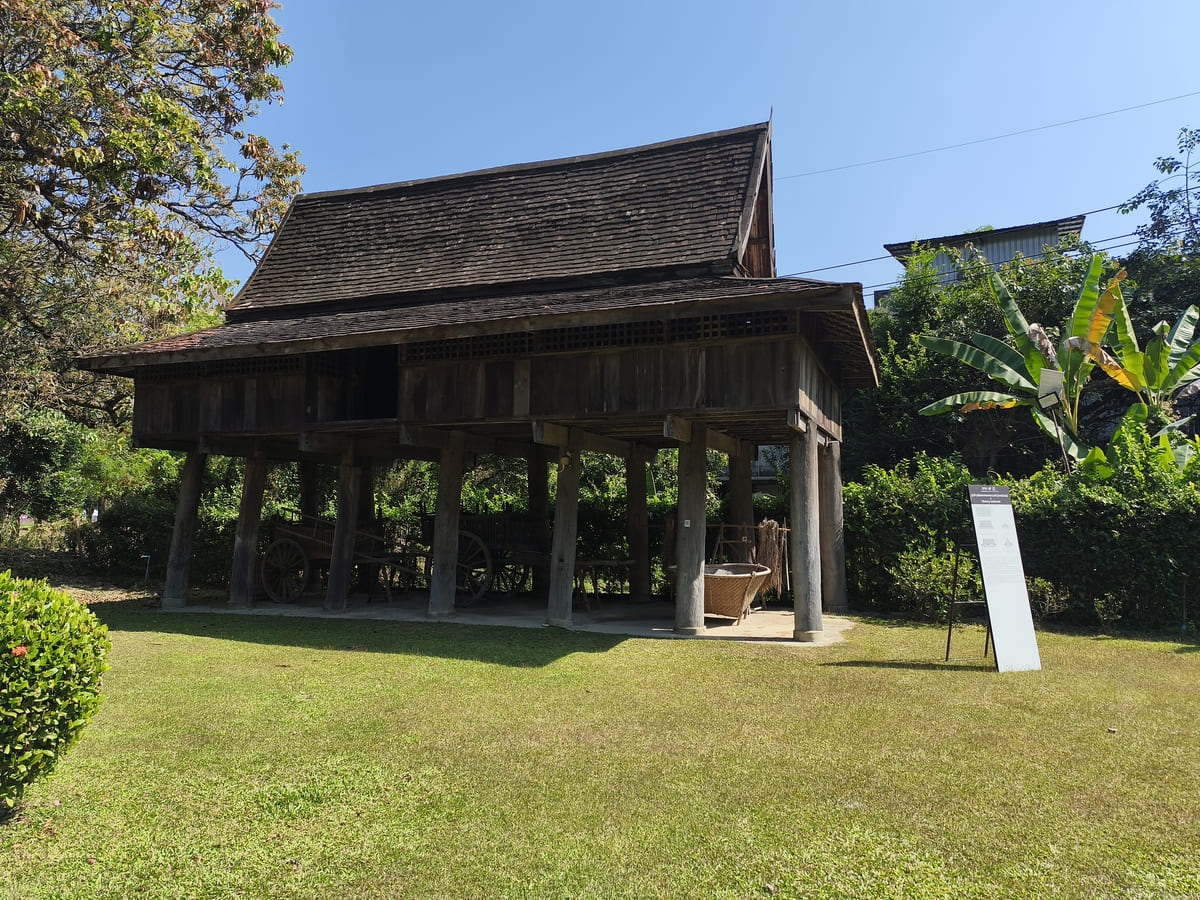
Some of the buildings (like the one above) you can only see from the outside. However, most (like the one below) can be entered. One or two houses had steps that were a bit tricky, but most were easy to get in and out of.
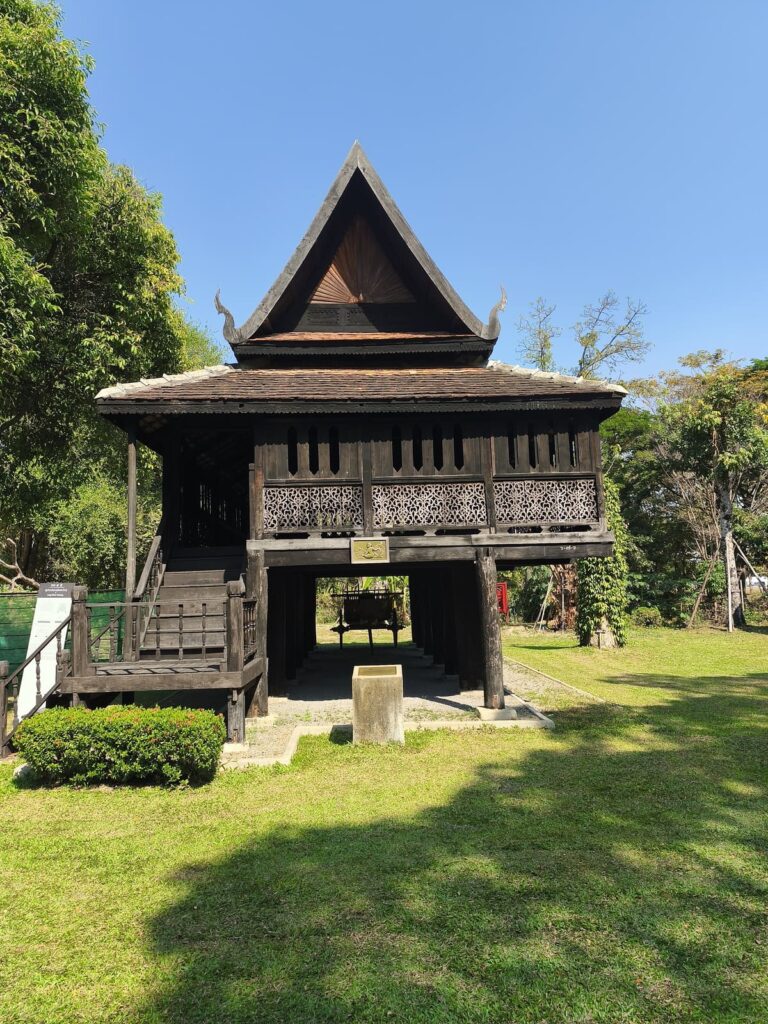
There is some effort made in a couple of houses to show how people actually lived in them, but for the most part you will have to use your imagination.
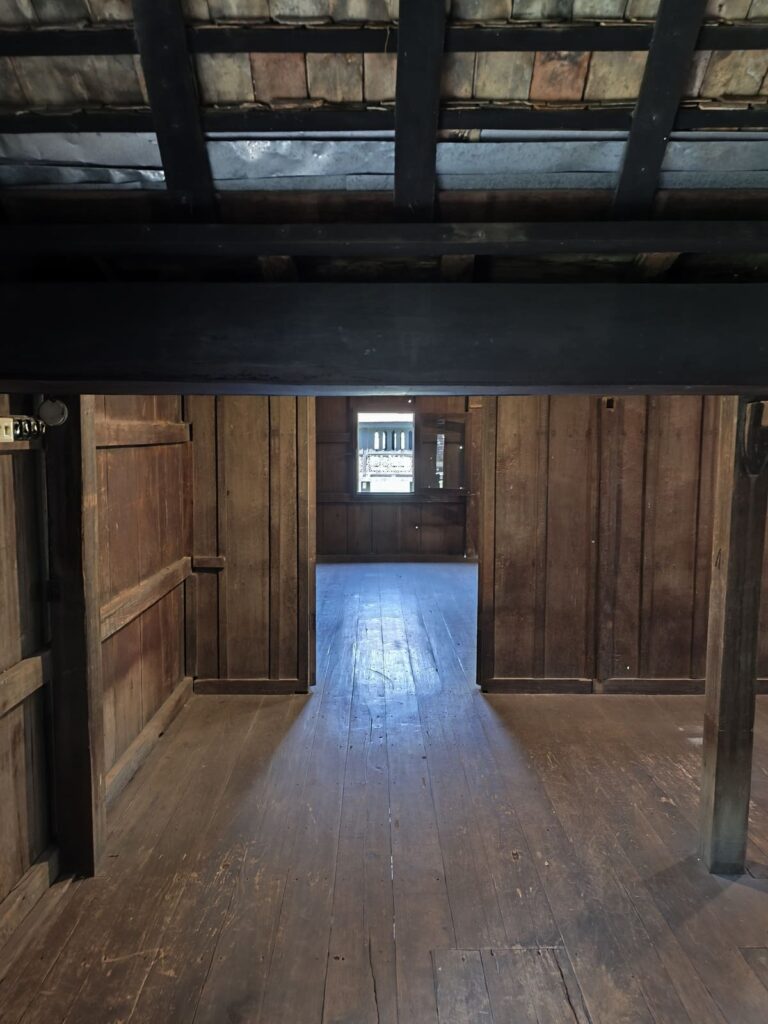
Interior of one of the larger Lanna Houses
The houses are mostly constructed from wood, but bamboo is used as well. Not being used to that, I did find it a bit of an adventure walking on the feeble-looking material!
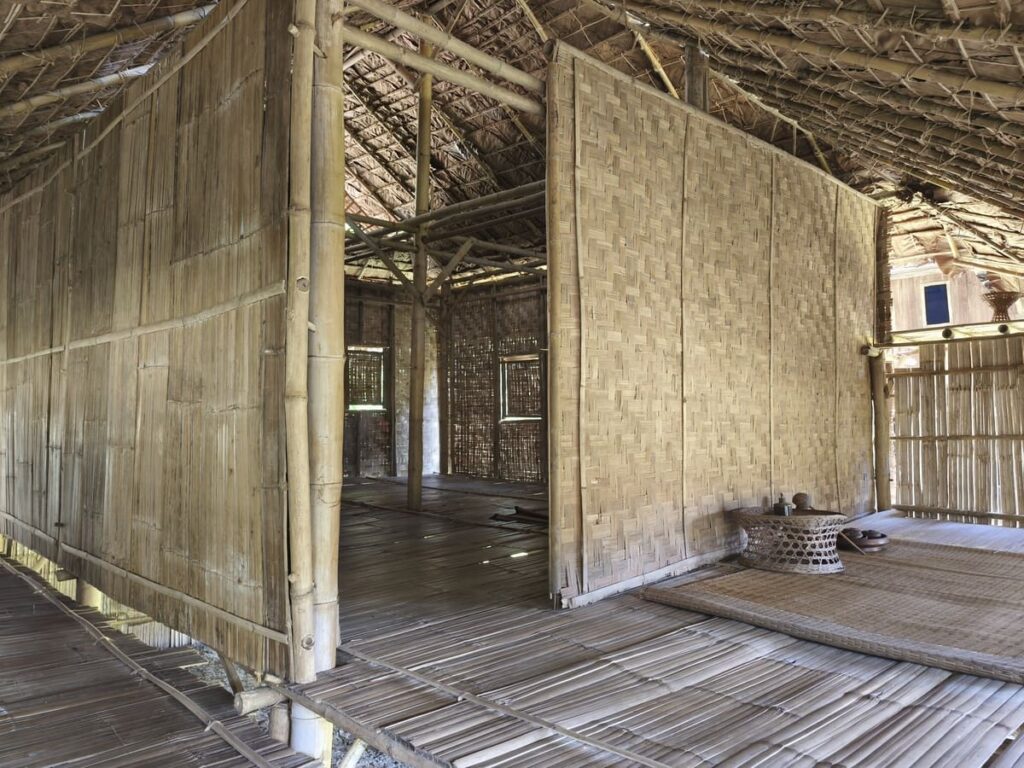
Bamboo was used for the sleeping areas
There were a handful of visitors when I was there but it was far from crowded. Overall, the Museum had a very serene, meditative vibe (Though you can hear the nearby traffic and the airplanes flying overhead are fairly loud).
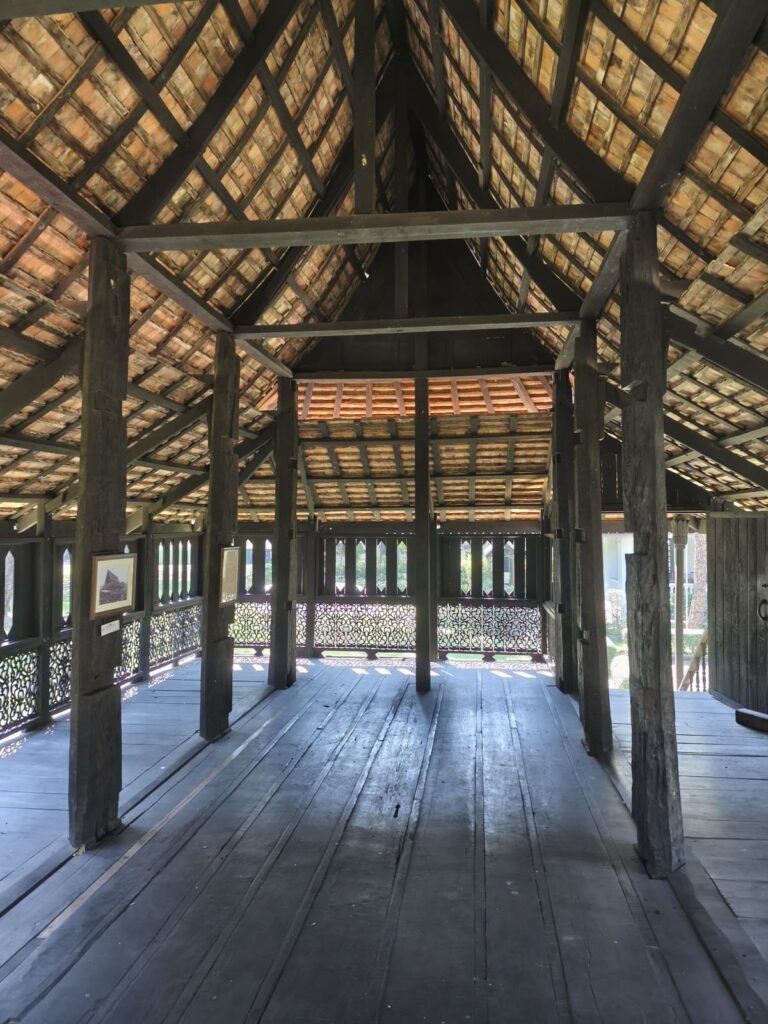
I loved the way the light filtered in through the roof and sides!
Other Activities
The Lanna Traditional House Museum would make a good destination for families as there is some nature and space for kids to run around and explore.
This museum is mostly a place to learn about traditional architecture, admire the various old buildings, and enjoy the serene atmosphere. But there are a couple of other things to do.
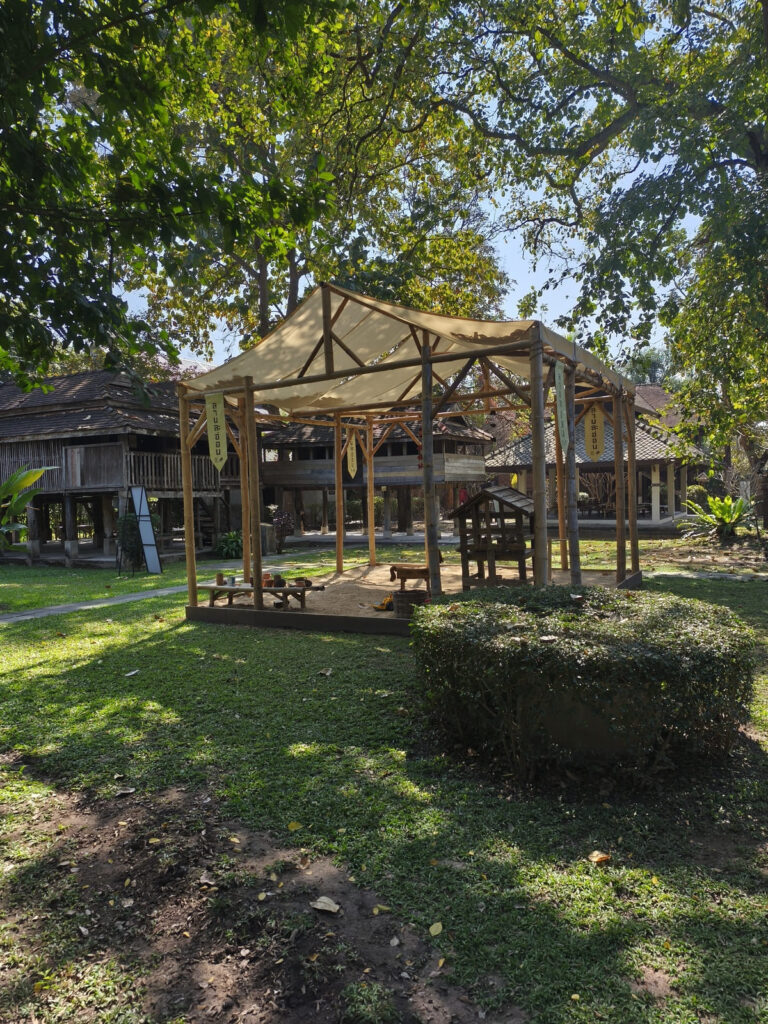
Small covered sand box/play area
Towards the center of the park you will find a small activity area with an attached sand box/play area. This is clearly mostly designed for families but I really enjoyed it on my own (not the sand box!).
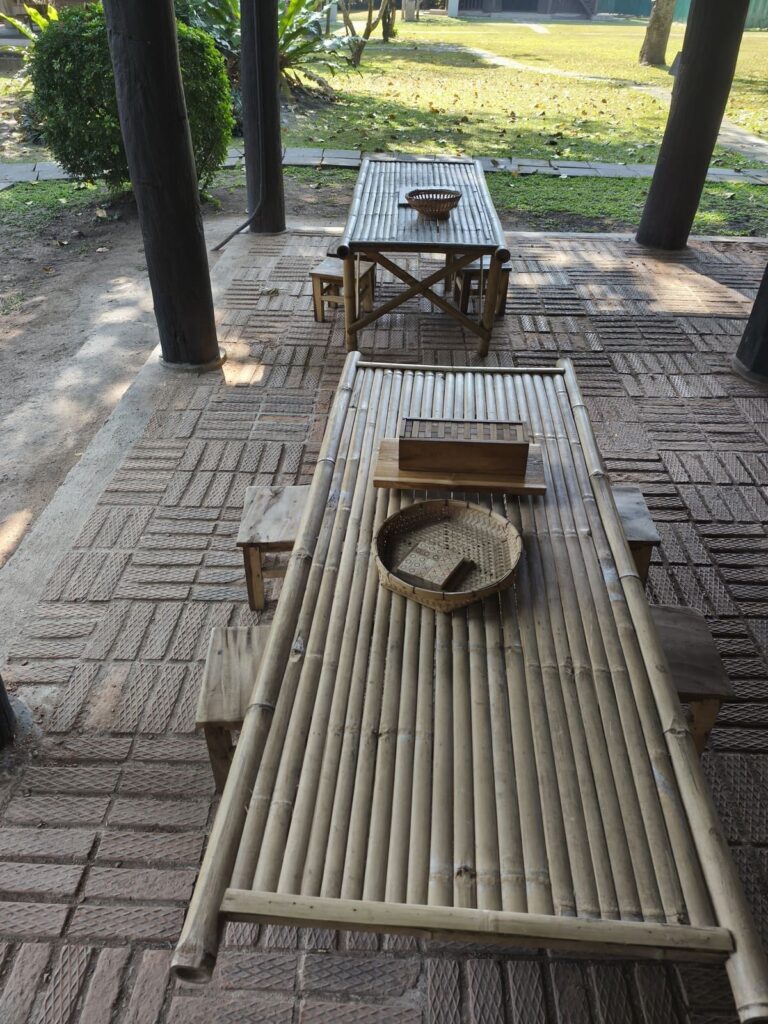
There are some games set up for playing (as a solo traveler I skipped those). But there were also papers with designs for coloring in, rather like a Mandala. And that was something I definitely did not skip!
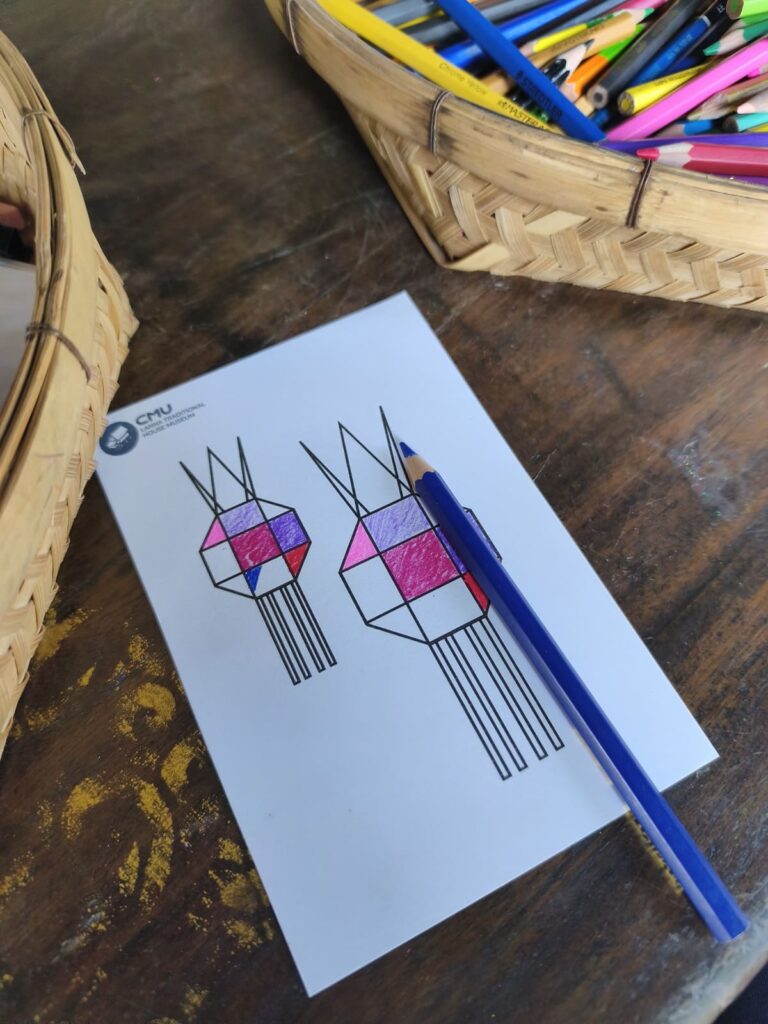
I did feel slightly conspicous doing this without kids along. But it was a wonderful calming, meditative activity which went very well with the overall vibe of the museum
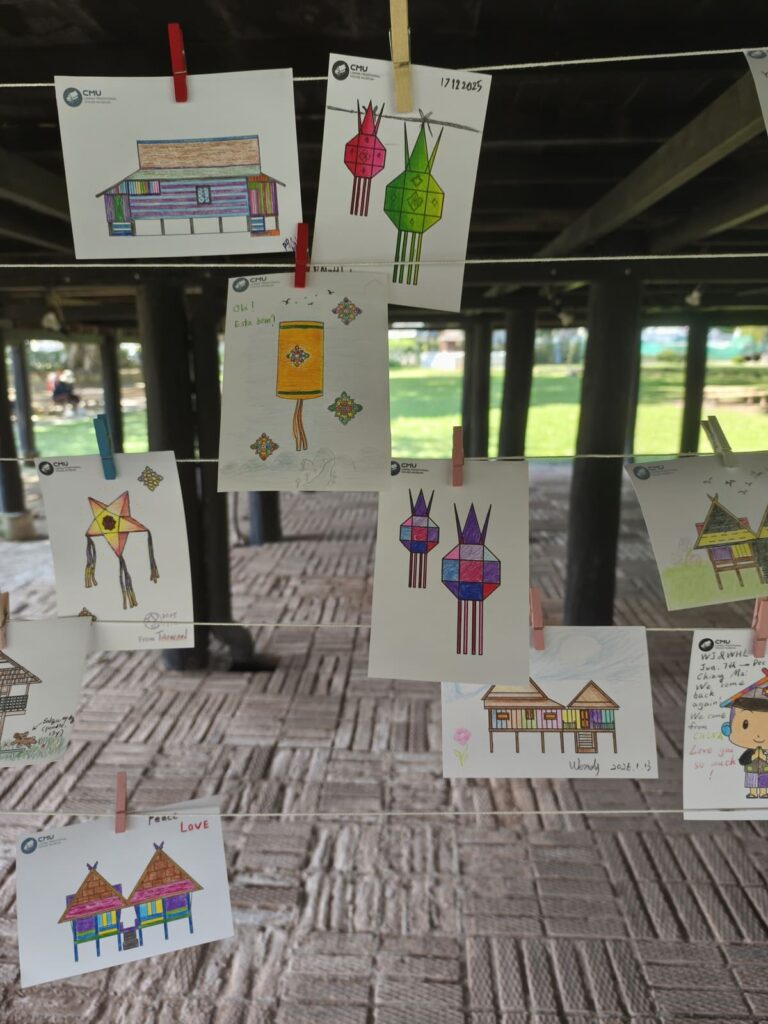
And when I hung up my “master piece” at the end I realized that most of them seemed to have been done by adults or at least older kids as they were quite artistic.
Other Amenities
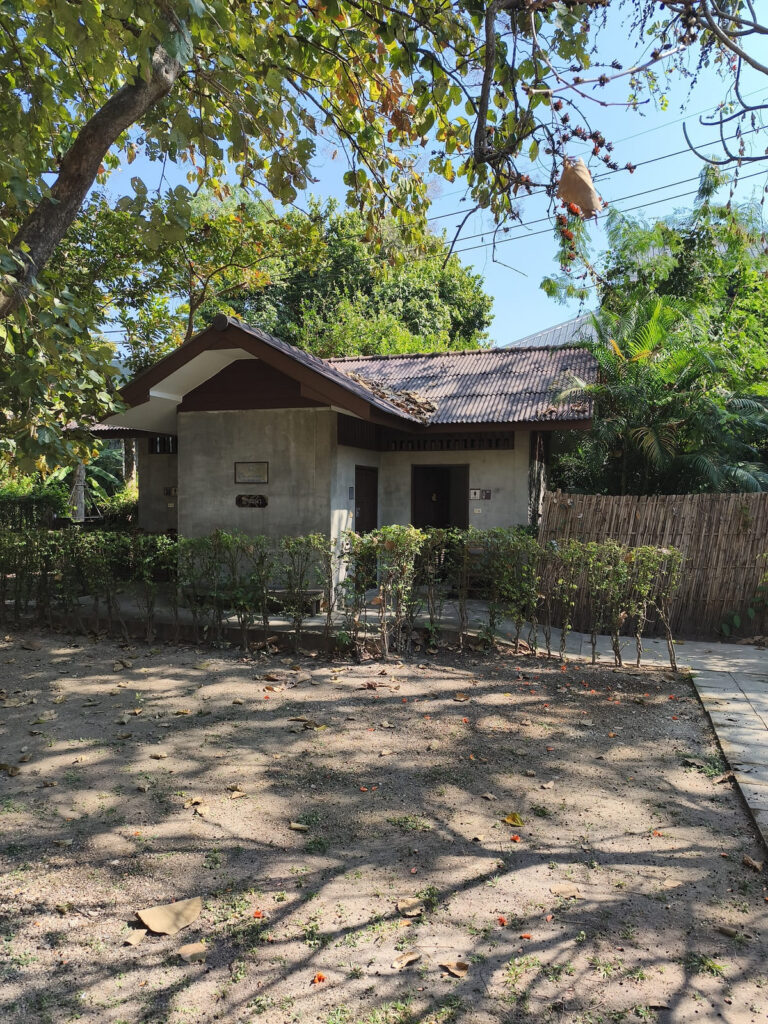
You will find a public rest room close to the back of the park and there is another one near the entrance.
There are also benches in the middle of the park to just sit, relax, maybe read or meditate.
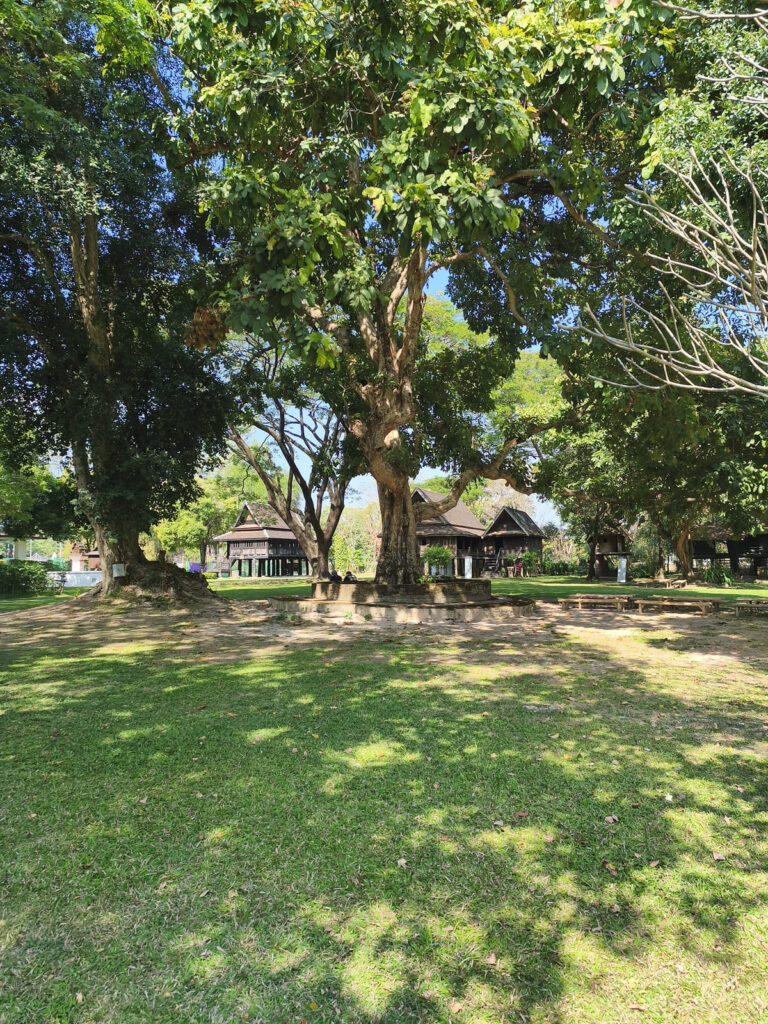
So what did I think?
I definitely enjoyed my visit of the Lanna Traditional House Museum. Not only does it make a nice change from the many, many temples and markets in Chiang Mai, it also is set in nature which can be a bit hard to find in the center of town.
It would be fun for kids, giving them a chance to run around a bit without constant traffic. Of course the museum is a must-see for anyone with an interest in architecture or building. And it is one of the best relaxing outdoor places in Chiang Mai.
On the negative side, it isn’t the most engaging museum I have seen. The information is a bit dry and more effort could be made to make history come to life.
So my recommendation would be to visit if you are in the area, crave some green spaces, or have a special interest.
My verdict: Very nice, but probably not an absolute must-see.
Don’t leave home without it
I can honestly say that I would never go on a trip without the appropriate insurance. Needs vary and there are many different insurance products. Personally, I think medical insurance at a minimum is essential. It only takes a small injury or a pesky virus to rack up the bills!
World Nomads offers coverage for more than 150 adventure activities as well as emergency medical, lost luggage, trip cancellation and more and is often recommended for international travelers who want comprehensive protection.
SafetyWing is a budget-friendly option offering a subscription model and is especially well-suited to long-term travelers or digital nomads.
As always, read the fine print, check your existing coverage, and make sure it is the right product for you.
I receive a fee when you get a quote from World Nomads using this link. I do not represent World Nomads or SafetyWing. This is not a recommendation to buy travel insurance.